SÜDPACK Newsletter
Receive regular updates about SÜDPACK, our products and sustainability topics.
Receive regular updates about SÜDPACK, our products and sustainability topics.
Europe dominates the global cheese market, with a share of nearly 50%. Rising cheese consumption, an increasing variety of product formats, and new regulatory requirements are driving demand for packaging that protects cheese as a natural product while combining material efficiency, processability, and recyclability. This makes it increasingly important for manufacturers and packers to take a holistic view of the entire system – from the product and packaging to machinery, logistics, retail, and consumer use.
The EU Packaging and Packaging Waste Regulation (PPWR) is putting greater emphasis on design for recycling, reducing material use, and assessing packaging against binding criteria. At the same time, optimization must not come at the expense of shelf life, food safety, or process stability. SÜDPACK is one of the pioneers in cheese packaging. More than 60 years ago, master dairyman and company founder Alfred Remmele laid the foundation for the family business with the development of an early cheese-maturing pouch. Today, the portfolio in the dairy segment includes, in addition to ripening bags, packaging solutions for cuts of cheese, sliced and grated cheese, as well as mozzarella and other specialty cheeses.
Three trends are shaping the packaging market
In the coming years, packaging development is likely to focus primarily on three areas: thinner, higher-performance material structures, recyclable mono-material concepts, and barrier properties tailored more precisely to the specific cheese product. Further improvements are expected in sealing materials, packaging formats, and energy-efficient processing.
Requirements vary depending on the type of cheese and packaging format. Packaging must control oxygen and moisture ingress, preserve flavor and freshness, support ripening where required, and run reliably on existing packaging machines. However, maximum barrier performance is not always desirable: Products that release gases may require a defined level of gas exchange.
Mono-materials: a key development pathway
SÜDPACK considers the use of PE- and PP-based mono-materials key to advancing the circular economy, since established material loops for both polymers already exist in many EU countries. These materials are suitable for a wide range of cheese applications – from pouches and flow packs to thermoformed packaging for sliced cheese. At the same time, optimizing existing packaging systems remains important. In many cases, reducing film thickness, optimizing pack formats, or incorporating a reclose system can deliver sustainability benefits compared with laminate structures or packaging without a reclose system.
It is crucial that the choice of material and film structure be considered in conjunction with sealing performance, mechanical strength, and machinability.
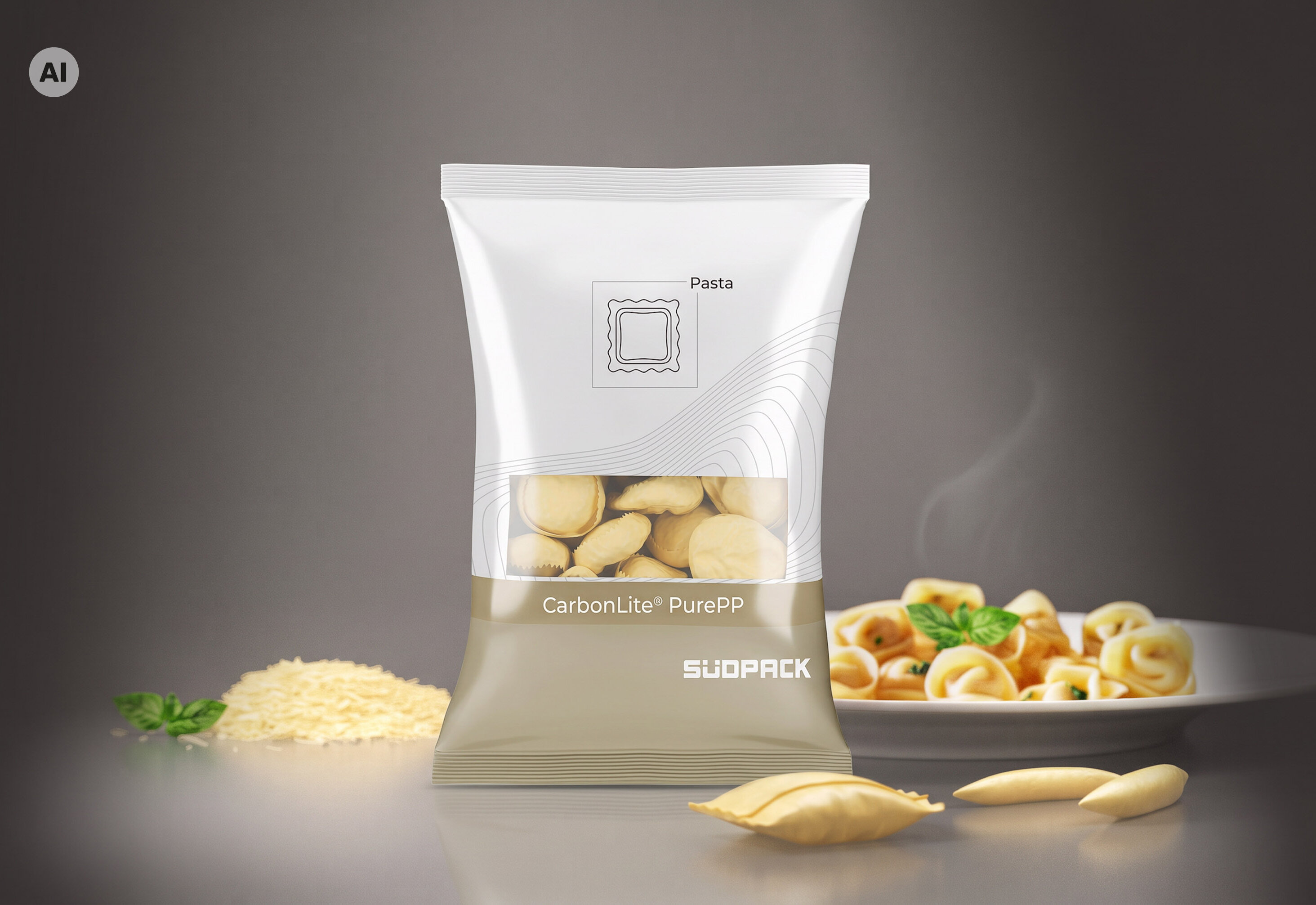
One ideal packaging concept for cheese snacks, mozzarella, grated cheese, and cuts of cheese is the PP- and PE-based flow packs in the CarbonLite® product family. They are lightweight and can be equipped with suitable gas and water vapor barriers depending on the application. Cuts of cheese, for example, require controlled gas exchange, while mozzarella places particular demands on sealability in the presence of brine, as well as on puncture resistance and leak tightness. For zipper pouches used for grated cheese, sealing the zipper at high cycle speeds can be challenging. SÜDPACK addresses this with PE structures, which can often be processed more consistently, easily, and safely on existing machinery than PP materials.
Coextrusion is key to high-performance mono-material concepts
Coextrusion is one of SÜDPACK’s core strengths. By precisely combining different functional layers, the film manufacturer can reliably tailor properties such as barrier performance, mechanical stability, sealability, and machinability, while designing packaging concepts specifically for the product, process, and existing packaging machine. New developments can be tested at industrial scale on the state-of-the-art multiXtrusion pilot line and then move directly into in-house production once testing has been successfully completed. For customers, this reduces the development risk and provides greater certainty when planning the transition to mono-materials.
Reclose systems help prevent food waste
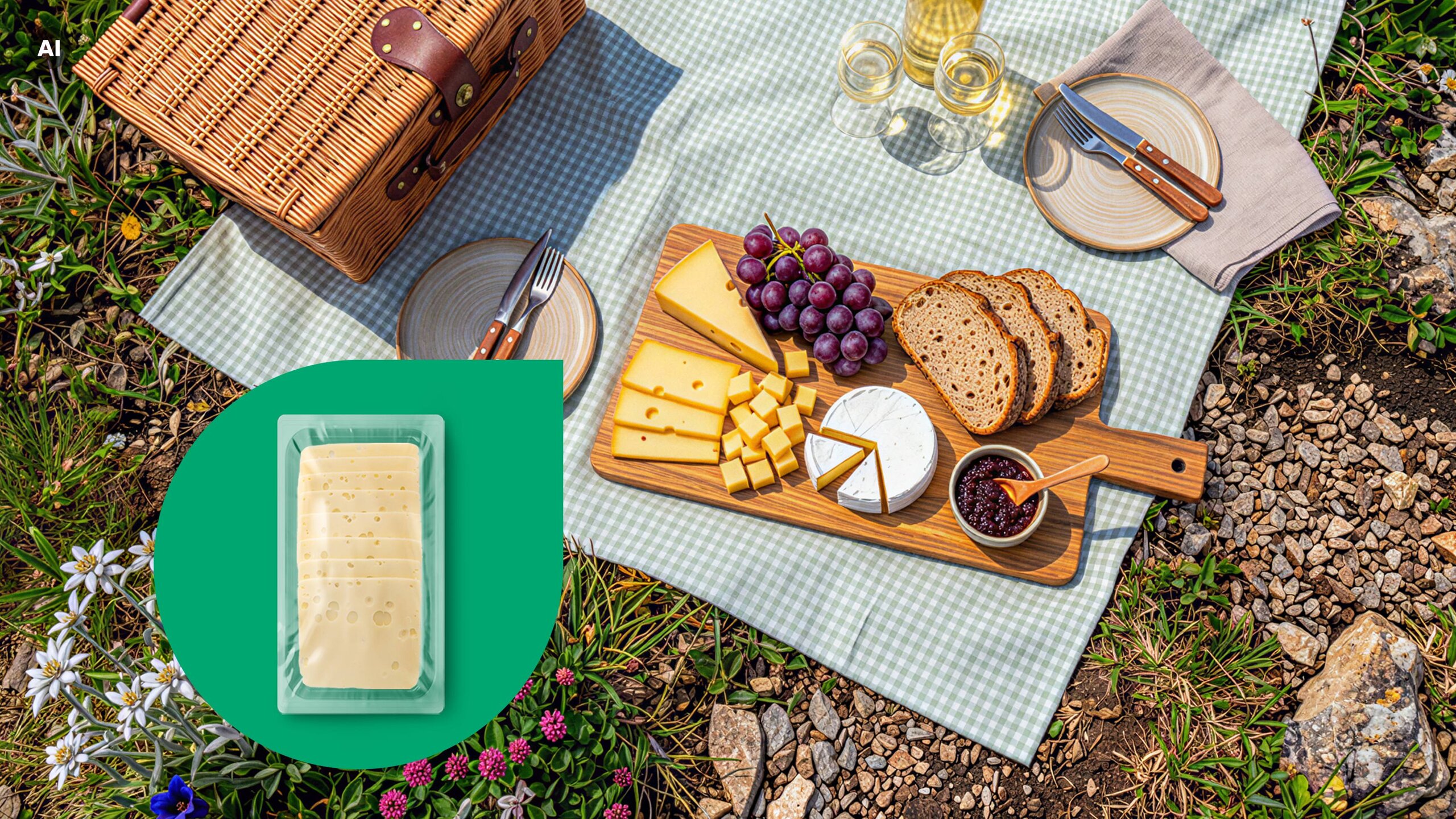
Thermoformed packaging is the predominant format for sliced cheese because it presents the product attractively in refrigerated display cases while allowing consumers to remove slices easily. When equipped with a reclose system, the package helps keep the sliced cheese from drying out quickly after it is first opened, thereby also reducing the risk of premature spoilage.
The Multipeel Pure PP top web can be combined with a mono-PP rigid film to create an all-PP packaging concept that can be assigned to existing recycling streams.
Alternatively, Multipeel can also be sealed to mono-APET trays. Its material composition allows it to be cleanly separated from the APET bottom web during the recycling process, enabling the APET trays to be directed to the appropriate recycling stream as a pure-grade material.
From collaborative development to reliable implementation
Whatever packaging concept customers choose, SÜDPACK’s experts provide active support throughout the process – from the initial idea through the entire development phase to successful implementation. After all, making the switch to designed-for-recycling packaging concepts raises both practical and economic questions: How can product protection be ensured? What modifications are required to existing packaging machines? How will new materials perform during processing?
SÜDPACK supports these development and transition projects with materials and application consulting, sample runs, testing, as well as assessments of CO2 impact and recyclability. The goal is to minimize transition risks and ensure that new packaging concepts can be reliably integrated into existing production processes.