


SÜDPACK Newsletter
Receive regular updates about SÜDPACK, our products and sustainability topics.
Receive regular updates about SÜDPACK, our products and sustainability topics.
How reliable data enables more sustainable packaging decisions
The PPWR and EmpCo are raising the bar for packaging and the way it is communicated. Going forward, traceable data, verified processes, and robust evidence will be essential—from material selection to the supply chain.
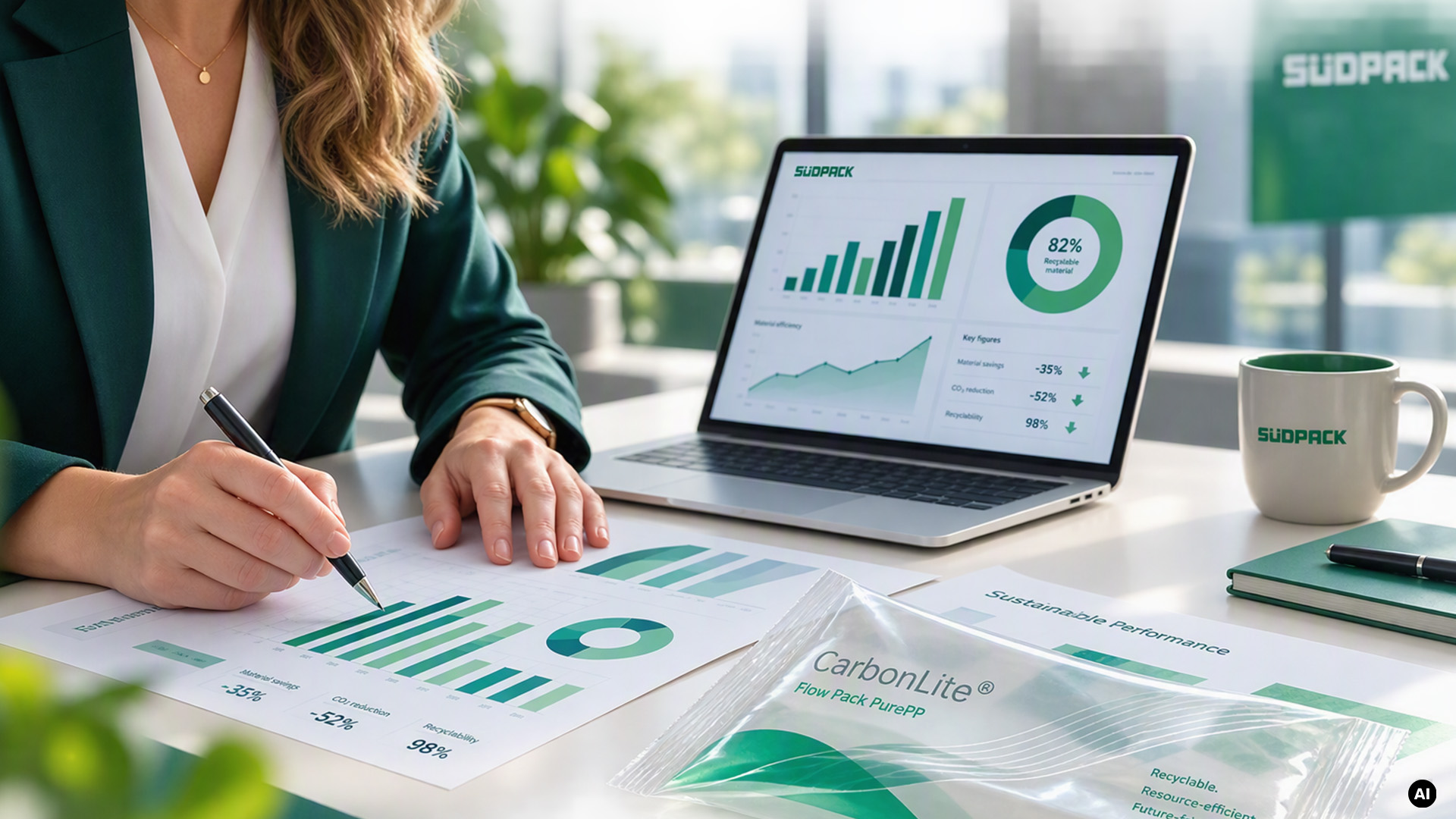
The requirements for packaging, including food packaging, are changing fundamentally. Among other priorities, the European Packaging and Packaging Waste Regulation (PPWR) places greater emphasis on design for recycling, packaging minimization, and documented compliance. Since August 12, 2026, the regulation has generally applied directly. Technical documentation and the EU declaration of conformity are therefore becoming key components of substantiating compliance.
At the same time, expectations for sustainability communications are increasing. The EmpCo Directive imposes tighter restrictions on general or insufficiently substantiated environmental claims. Statements must be precise, transparent, and supported by verifiable evidence.
For food manufacturers, the consequence is clear: Sustainability must be verifiable.
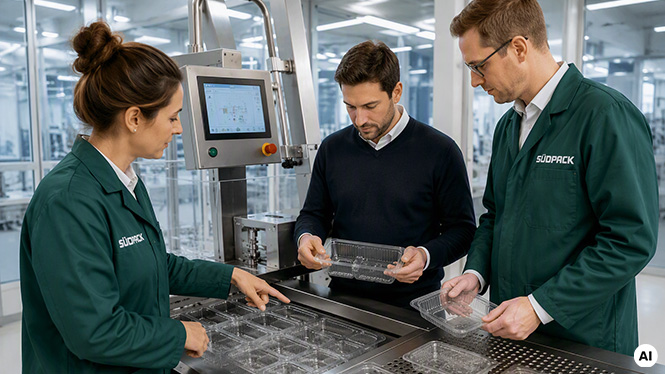
However, packaging cannot be reduced solely to recyclability or the lowest possible material use. Its core function remains the reliable protection of food. Barrier performance, integrity, sealing properties, and mechanical stability must be aligned with the product, process, and supply chain.
More sustainable packaging development therefore begins by determining what level of performance is actually required. The goal is not blanket minimization, but fit-for-purpose material use that combines product protection with resource efficiency.
To achieve this, SÜDPACK develops packaging concepts designed for recyclability while also tailored to the relevant functional requirements.
Whether a packaging alternative offers environmental advantages cannot be determined from the material type alone. Production, material quantity, energy use, transportation, and the end-of-life scenario all influence the overall assessment.
When customers transition from existing packaging to alternative concepts, SÜDPACK can use an internal tool to compare life cycle assessments within defined system boundaries.
In addition to greenhouse gas emissions, the analysis considers fossil resource consumption and other detailed environmental impact categories. Different end-of-life recovery pathways can be modeled as scenarios.
This enables decisions to be based on comparable data. The results support packaging development and the factual documentation of clearly defined environmental advantages, although they do not replace external validation.

The PPWR increases the need for structured data on packaging materials. Food manufacturers must consolidate relevant information from their supply chains and keep it available for technical documentation. The regulation therefore shifts the focus from downstream waste management toward packaging design and verifiable packaging properties.
SÜDPACK can provide structured, interoperable specification data for its packaging materials and offer advisory support. This reduces follow-up questions, facilitates collaboration among procurement, quality, packaging development, and sustainability management, and creates a stronger basis for documentation processes. Clear roles are essential: the final legal assessment and declaration of conformity remain the responsibility of the economic operator designated under the PPWR.
Looking ahead, further efficiencies may emerge:
industry-wide standardization of machine-readable export parameters could enable AI-assisted, streamlined imports into companies’ own systems.

A packaging concept designed for recycling delivers economic value only if it can be processed reliably. New films can affect sealing parameters, cycle rates, thermoforming behavior, or machine settings. Packaging must therefore be viewed as an integrated system comprising the material, product, machine, and process.
SÜDPACK supports customers from concept development and design for recycling through prototyping and laboratory analysis to machine trials, industrialization, and ongoing production support.
At its development and application center, SÜDPACK creates customized solutions and conducts application trials.
Practical projects with machinery and component manufacturers also demonstrate how films, equipment, and production lines can be aligned to ensure process stability. This allows risks associated with material changes to be identified earlier, supports stable production processes, facilitates the continued use of existing equipment, and protects investments in machinery.
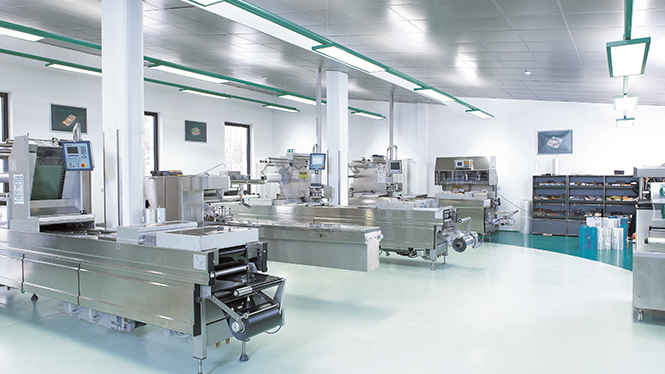
At the corporate level, substantiation also requires a reliable data foundation. The corporate carbon footprint (CCF) shows where emissions arise, how measures affect them, and where further action is needed.
SÜDPACK has committed to the Science Based Targets initiative. Its near-term targets for Scopes 1, 2, and 3.1 have been validated. According to the latest company data, total CO₂e emissions in 2025 were 21 percent below the 2021 base year. Scope 1 and 2 emissions were reduced by 73 percent, while Scope 3.1 emissions fell by 16 percent. A software solution currently being implemented will consolidate emissions data, targets, and progress in a dashboard and standardize data collection, analysis, and reporting.
This gives business partners transparent information on SÜDPACK’s emissions reduction measures and progress toward its targets. The information can support their own supplier assessments and the classification of procurement-related emissions. Data can be shared through supplier portals or questionnaires.
Sustainability requirements do not stop at the factory gate. Information on environmental management, labor and human rights, ethics, and procurement is becoming increasingly important for purchasing decisions and risk assessments.
In the 2026 EcoVadis rating, SÜDPACK achieved a score of 86 out of 100, again received the Platinum Medal, and ranked among the top one percent of companies assessed. The rating covered the environment, labor and human rights, ethics, and sustainable procurement. For customers, an external rating backed by documented information makes it easier to assess a supplier and supports their own procurement, audit, and risk management processes.
For packaging developers and buyers of packaging materials, the central task is therefore not to select the supposedly most sustainable material. What is needed is a coordinated system that brings together product protection, recyclability, environmental impact, process stability, data quality, and supply chain transparency.
In this environment, SÜDPACK positions itself not only as a film supplier, but as a solutions provider offering packaging development, application technology, LCA services, data support, and documented sustainability management. The strategic value lies in connecting these capabilities: environmental improvements can be assessed, technical risks can be tested under practical conditions, and relevant information can be structured and provided as supporting evidence.
Packaging thus evolves from an individual production resource into a documented component of a company’s sustainability, compliance, and investment strategy. Under the new framework, what matters is not only what packaging promises, but what can be substantiated.
With the EU declaration of conformity, the responsible economic operator confirms that packaging complies with the applicable PPWR requirements. It is based on technical documentation that provides a traceable record of relevant packaging properties and evidence of conformity.
The PPWR and the EmpCo Directive are raising the requirements for documentation and communication. Companies must collect relevant packaging data in a structured manner and support environmental claims with verifiable evidence. Robust evidence also supports procurement, audit, and risk management processes.
The EmpCo Directive imposes tighter restrictions on general or insufficiently substantiated environmental claims. Companies must therefore formulate sustainability claims precisely, provide transparent context, and support them with traceable or verifiable evidence.
What matters is not only which environmental properties packaging offers, but also whether these can be substantiated and whether the packaging also meets product protection, recyclability, process stability, and regulatory requirements. What is needed, therefore, is a documented, integrated system comprising the material, product, machine, processes, and robust data.