

SÜDPACK Newsletter
Receive regular updates about SÜDPACK, our products and sustainability topics.
Receive regular updates about SÜDPACK, our products and sustainability topics.
Why the right development partner makes all the difference when switching packaging materials
Rising costs, new consumer habits, and the PPWR are reshaping the demands on coffee packaging. Replacing conventional PET/aluminum/PE laminates with recyclable mono-PP structures therefore takes more than choosing a different packaging material. Product protection, recyclability, production processes, and brand impact all need to work together. Here’s how a change in material becomes a successful packaging concept.
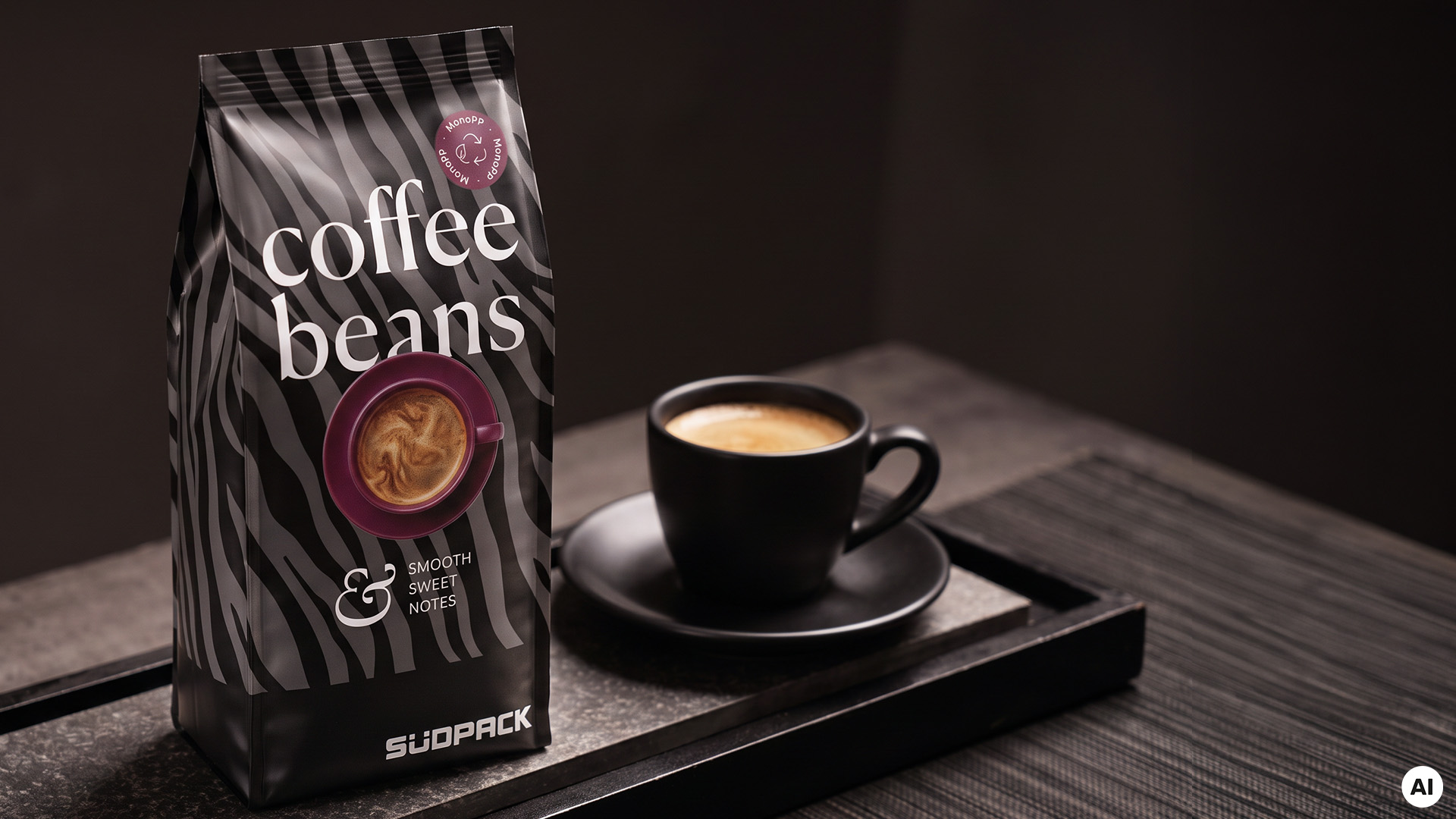
Coffee is an everyday pleasure with remarkable staying power. Behind the scenes, however, the market is shifting rapidly. Rising raw material costs are converging with new consumer habits, evolving product concepts, and growing regulatory requirements.
Germany illustrates the scale of this shift: Around 456,000 metric tons of roasted coffee were sold in 2025. While sales volume declined slightly year over year, revenue rose 23.5 percent to €8.98 billion. Whole-bean coffee, meanwhile, reached a new high of 193,800 metric tons. According to the German Coffee Association, one in three German households now owns a fully automatic coffee machine.
At the same time, the PPWR is changing the regulatory framework for packaging. The European regulation has applied directly in EU member states since August 12, 2026. Among other provisions, it requires packaging to be designed for recyclability. Recyclability performance grades will also become relevant from 2030, followed in 2035 by the requirement for packaging to be recyclable at scale.
For coffee roasters, these developments point to one central question: How can coffee packaging evolve without compromising its essential functions?
The obvious answer is often: mono-material.
But it is not quite that simple. Conventional PET/aluminum/PE laminates perform several tasks at once. A new packaging structure needs to deliver those functions in a way that fits the application, while also being designed for recyclability.
That is why a successful packaging transition does not start with the question: Which film should we use instead? It starts with: What does our packaging actually need to do?
PP-based mono-material solutions can be an option for recyclable coffee packaging. One solution SÜDPACK uses is CarbonLite® PurePP. According to internal calculations based on a scientifically defined assessment method, the film achieves a recyclability rating of approximately 90 percent, depending on print coverage.
One thing is already clear: Design for recycling starts with the material, but it certainly does not end there. Barriers, printing, functional components, and processing all need to be considered together from the outset.
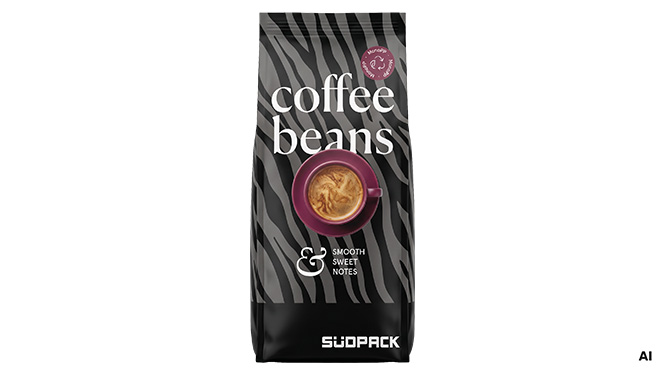
Whatever makes sense from a regulatory perspective must, above all, do one thing in practice: work.
Roasted coffee places high demands on its packaging. Oxygen, water vapor, and light can affect product quality. Freshly roasted beans bring an additional challenge: The carbon dioxide released during roasting needs to escape from the package.
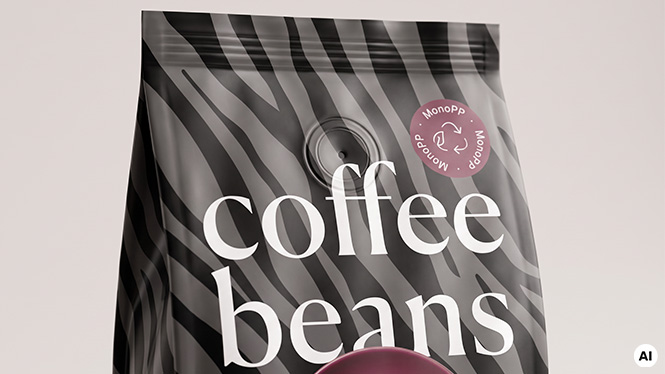
Developing mono-material coffee packaging is therefore a demanding task. SÜDPACK offers PP-based solutions with oxygen and water vapor barriers, as well as optional UV protection. Aroma-protection valves can also be reliably sealed into the packaging during processing.
The key point: Aroma protection and recyclability cannot be developed in isolation. The goal is to provide precisely the functions the product and application require—and combine them with packaging designed for recycling.
A new structure may look convincing on paper. Whether it works in day-to-day production, however, becomes clear on the packaging line.
A change in material can also change the properties that matter during processing. Sealing performance, stiffness, folding behavior, valve integration, and machinability therefore become critical factors in packaging development.
A specific application developed by SÜDPACK and Hesser Packaging demonstrates that PP-based coffee packaging can be processed on an industrial scale: A PP-based stand-up pouch in a 1 kg format for whole-bean and ground coffee was produced on a vertical form-fill-seal machine.
The example also highlights why technical support is so important during a transition. It does not mean that every existing packaging line can handle every mono-PP structure without adjustments. Material, product, format, valve, and machine need to be considered as one integrated system.
This is precisely what separates a simple material swap from a well-planned packaging transition.
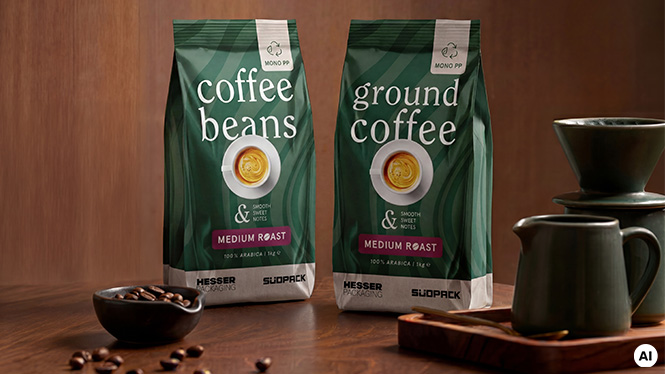
With so much focus on technology, another factor deserves attention: Coffee packaging does more than protect the product. It also brings the brand to the shelf.
Packaging presentation matters particularly when coffee brands differentiate themselves through origin, quality, or distinctive product concepts. Switching materials should not mean having to compromise the brand’s impact.
SÜDPACK offers gravure, flexographic, and digital printing options for its coffee packaging. This allows print design and packaging to be tailored to the product and customer requirements.
The question during a transition is therefore not just: Is the new packaging recyclable? Equally important: Does it protect the product, run reliably in production, and continue to convey the intended brand image?
Bringing these elements together is what turns a packaging concept into a solution that works in practice
This is what makes the transition from PET/aluminum/PE to mono-PP more demanding—but also more interesting—than a simple exchange of materials might suggest.
Coffee roasters looking to prepare their packaging for future requirements should bring different perspectives together early: product protection and material structure, PPWR requirements and design for recycling, production conditions and brand presentation.
SÜDPACK sees its role not simply as a film supplier, but as a development partner. Its support ranges from material selection and the development of recyclable packaging structures to design for recycling, testing, sampling, and technical process support.
Ultimately, there is much more at stake than the choice between PET/aluminum/PE and mono-PP.
The goal is to develop packaging in which material, product, production, regulatory requirements, and brand presentation work together as effectively as possible. That is why a successful transition depends not only on the right material, but above all on the right development approach.
Growing regulatory requirements for packaging recyclability are a key driver. The PPWR requires packaging to be designed for recyclability and introduces recyclability performance grades from 2030. Mono-PP can be a suitable material strategy, provided the specific packaging structure meets the applicable requirements.
PP-based monomaterial solutions can combine packaging designed for recycling with the functional requirements of coffee. SÜDPACK offers structures with oxygen and water vapor barriers, optional UV protection, sealing performance, and the option to integrate aroma-protection valves.
An existing laminate structure performs several functions at once. A transition therefore needs to consider not only recyclability, but also product protection, sealing behavior, mechanical properties, valve integration, print design, and processing on the packaging line. A successful transition is a development process, not simply a material swap.
The PPWR establishes a harmonized EU-wide legal framework for packaging and packaging waste. It addresses the entire packaging life cycle and sets requirements for areas including recyclability and packaging minimization. It has applied directly since August 12, 2026, with further requirements taking effect in stages.
In principle, mono-PP can also be processed on existing equipment. A specific application developed by SÜDPACK and Hesser Packaging demonstrates industrial processing of PP-based coffee packaging on a vertical form-fill-seal machine. However, whether an existing line is suitable for a particular application should be assessed individually.