


SÜDPACK Newsletter
Receive regular updates about SÜDPACK, our products and sustainability topics.
Receive regular updates about SÜDPACK, our products and sustainability topics.
Skin packaging extends the shelf life of food while combining strong product protection, reliable food safety, and the responsible use of resources.
Extending the shelf life of food is one of the most effective ways to combat food waste. Vacuum skin packaging, in particular, provides strong product protection, preserves the freshness of sensitive products, and significantly extends shelf life. Discover why intelligent packaging concepts make a decisive contribution to sustainability, resource conservation, and economic efficiency.
 28/07/2026
  9 min.
 Why food loss is a sustainability challenge
The often-underestimated role of packaging
Skin packaging: where product protection meets resource efficiency
How vacuum skin packaging extends food shelf life
Less food waste through longer shelf life
Taking a holistic view of sustainability
Conclusion: packaging for longer shelf life as a lever against food waste
Food is a valuable resource. Yet every year, around 1.3 billion metric tons of food are lost or wasted worldwide—roughly one third of global food production (source: FAO). At the same time, food loss is receiving increasing attention from policymakers, industry, and consumers alike. After all, every item of food that is not consumed also represents an unnecessary use of energy, water, land, and raw materials.
For food producers and packaging developers, this raises a key question: How can food shelf life be extended without compromising quality, safety, or sustainability?
The right packaging for longer shelf life plays a crucial role. Vacuum skin packaging in particularoffers significant potential to reduce food loss, preserve freshness, and improve the environmental footprint of packaged products.
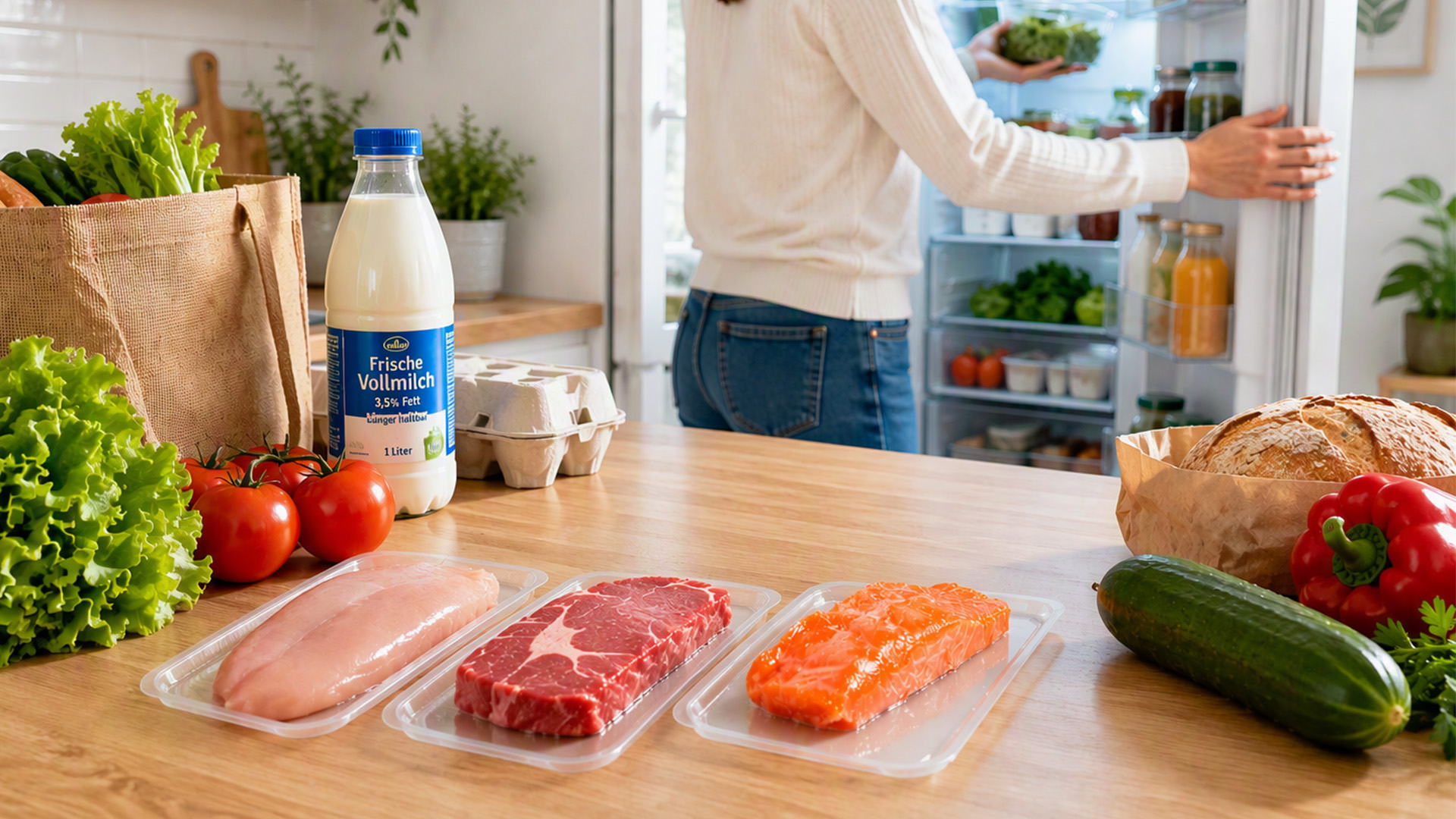
The environmental impact of food begins long before it reaches the supermarket shelf. Cultivation, processing, transportation, refrigeration, and storage all require substantial resources and energy.
A study by the Institute for Energy and Environmental Research (ifeu) shows that greenhouse gas emissions vary widely from one food product to another. While regional carrots generate only around 0.1 kg of CO₂ equivalents per kilogram, the figures rise to approximately 5.7 kg of CO₂ equivalents for cheese and around 13.6 kg of CO₂ equivalents for beef per kilogram of food (source: ifeu, 2020).
At the same time, the Food and Agriculture Organization of the United Nations (FAO) estimates that roughly one third of all food produced worldwide is lost or wasted. In the European Union, up to 90 million metric tons of food waste are generated each year. In Germany, the figure is as high as 18 million metric tons (sources: FAO; European Commission).
Against this backdrop, preventing food waste along the entire value chain is becoming increasingly important. One of the most effective measures is extending product shelf life through suitable packaging concepts.
In public debate, packaging is often viewed solely as a source of waste. A more holistic perspective, however, reveals a more nuanced picture.
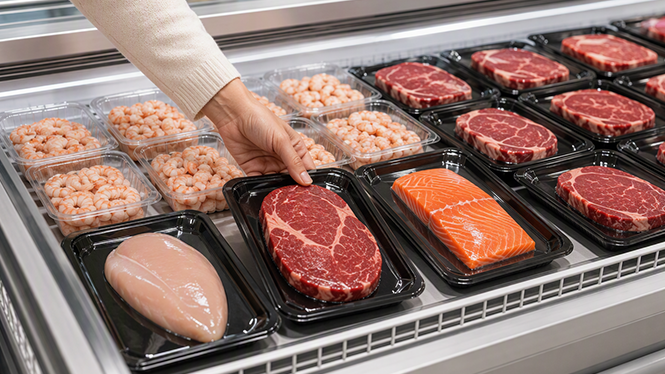
On average, the environmental footprint of packaged food over its entire life cycle is about 30 times higher than that of the packaging itself. Packaging therefore accounts for only a comparatively small share of a food product’s overall environmental impact.
What matters, therefore, is not the amount of packaging material alone, but the packaging’s ability to protect the product effectively. Every instance of food waste avoided saves far more resources than is used to produce the packaging.
High-performance packaging can:
- extend shelf life
- prevent product damage
- ensure hygiene and product safety
- protect aroma and nutrients
- reduce losses during transportation and storage
- preserve freshness for longer
This makes packaging an important tool for greater sustainability in the food industry.
Vacuum skin packaging is one of today’s particularly effective packaging solutions.
In skin packaging, the product is placed on a dimensionally stable bottom web or tray and then sealed under vacuum across its entire surface with a specialized top film. The transparent film fits closely around the product like a second skin—without altering its shape.
The result:
- maximum product visibility
- high package stability
- optimal product protection
- reduced product movement inside the package
- an attractive presentation at the point of sale
At the same time, the close-fitting film structure can reduce material use without compromising protective performance.
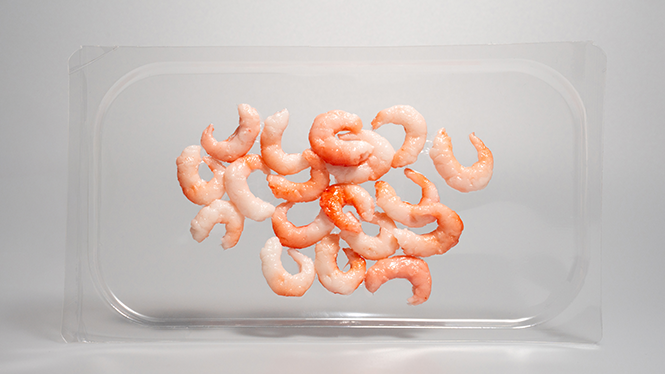
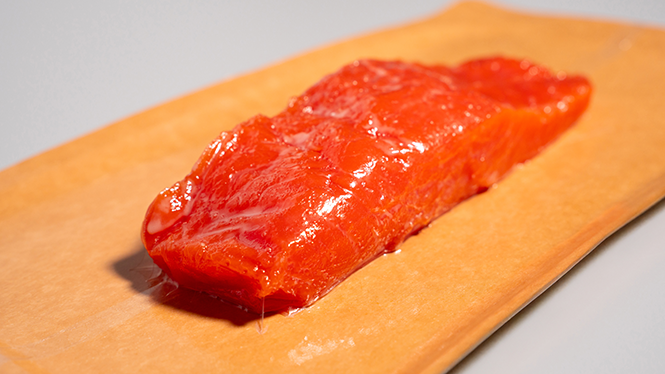
The greatest advantage of skin packaging lies in its ability to extend the shelf life of food.
Especially for fresh and sensitive products such as meat, fish, cheese, or deli foods, the vacuum significantly reduces the oxygen content inside the packaging. This slows down various processes that can lead to spoilage.
For meat products, for example, oxygen removal inhibits the growth of many aerobic microorganisms. At the same time, the carbon dioxide that forms inside the package supports the product’s microbiological stability. In combination with suitable barrier properties, this can achieve a significantly longer shelf life.
Vacuum skin packaging also offers additional benefits:
→ protection against drying out
→ reduced weight loss
→ preservation of color and texture
→ protection against freezer burn in frozen products
→ consistent product quality over extended storage periods
For manufacturers, this means greater process reliability and more flexibility along the supply chain. For retailers and consumers, it increases the likelihood that the product will actually be consumed rather than discarded prematurely.
The link between shelf life and food loss is clear.
Studies show that a significant share of food waste could be avoided through longer shelf life. According to research cited by the Food Safety Magazine, up to 50 percent of food waste at the consumer level could be prevented if products remained fresh and edible for longer. Packaging solutions can help extend shelf life and thereby reduce food loss along the value chain. [food-safety.com]
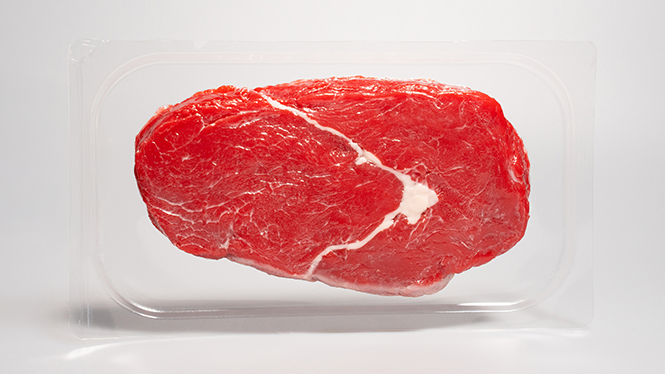
The packaging of high-quality beef provides a particularly compelling example:
By switching from MAP packaging to vacuum skin packaging, retail shelf life was increased from six to sixteen days—an improvement of around 167 percent. At the same time, the retail waste rate fell from twelve percent to three percent, reducing the amount of waste by 75 percent. (Presented in the “Guide for Packaging Manufacturers, Food Processors, Retailers, Policymakers & NGOs” as part of the “STOP waste – SAVE Food” project, Vienna, February 2020, p. 12ff.)
These findings illustrate that intelligent packaging concepts go far beyond pure product protection. They actively help reduce food loss and enable resources to be used more efficiently.
Sustainable packaging is not defined by recyclability alone. Its contribution to preventing product loss is just as important.
That is why a holistic approach is essential—one that considers the entire life cycle of a product, from raw material extraction and production to distribution, use, and recovery.
Modern skin packaging supports this approach through:
- extended shelf life
- reduced material use
- efficient logistics
- high product safety
- the prevention of food waste
The food industry faces the challenge of bringing together product protection, economic efficiency, and sustainability. Reducing food loss is one of the key levers.
Vacuum skin packaging makes a measurable contribution in this area. It reliably protects sensitive products, extends shelf life, helps preserve freshness, and reduces food loss along the entire value chain.
For food producers and packaging developers, vacuum skin packaging therefore offers far more than an attractive product presentation: It is a technological building block for more efficient processes, better product protection, and a more sustainable approach to valuable food resources.
Skin packaging seals the product under vacuum with a transparent top film. Because the oxygen content is reduced, microbiological and oxidative processes slow down. This helps preserve freshness, quality, and product safety for longer.
The longer a product remains safe and enjoyable to eat, the more likely it is to be sold, used, and consumed. Extended shelf life therefore reduces losses in retail, logistics, and consumers’ homes.
Every item of food that is not wasted also saves the resources required to produce it. When less food is discarded, the associated greenhouse gas emissions and the consumption of energy, water, and agricultural land also decrease.
Packaging solutions with high barrier properties and a controlled atmosphere are particularly effective. These include vacuum skin packaging, which is used for many meat, fish, cheese, and deli applications and enables a significant extension of shelf life.
Note: Selected graphics used in this article were created with the support of generative AI.