


SÜDPACK Newsletter
Receive regular updates about SÜDPACK, our products and sustainability topics.
Receive regular updates about SÜDPACK, our products and sustainability topics.
From product protection and convenience to design for recycling: the requirements modern packaging concepts for drinkable yogurt need to meet—and why dairies are exploring new approaches.
New consumption habits, rising recyclability requirements, and mounting pressure to innovate are transforming the market for drinkable yogurt. As a result, dairies increasingly face a key question: Which packaging concepts can combine product protection, consumer convenience, and long-term viability?
What requirements must drinkable yogurt packaging meet?
From product idea to the right packaging concept
Which packaging concepts are suitable for drinkable yogurt?
Why spouted pouches are gaining relevance for dairies
Greater efficiency along the supply chain
From concept to market-ready packaging
Rethinking packaging without compromising product protection
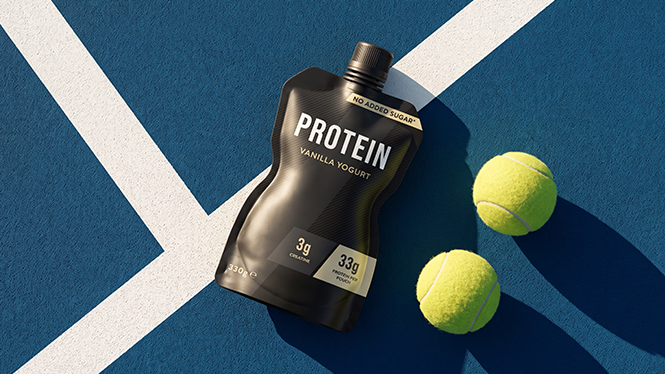
Drinkable yogurt is one of the product categories benefiting particularly strongly from changing dietary and consumption habits.
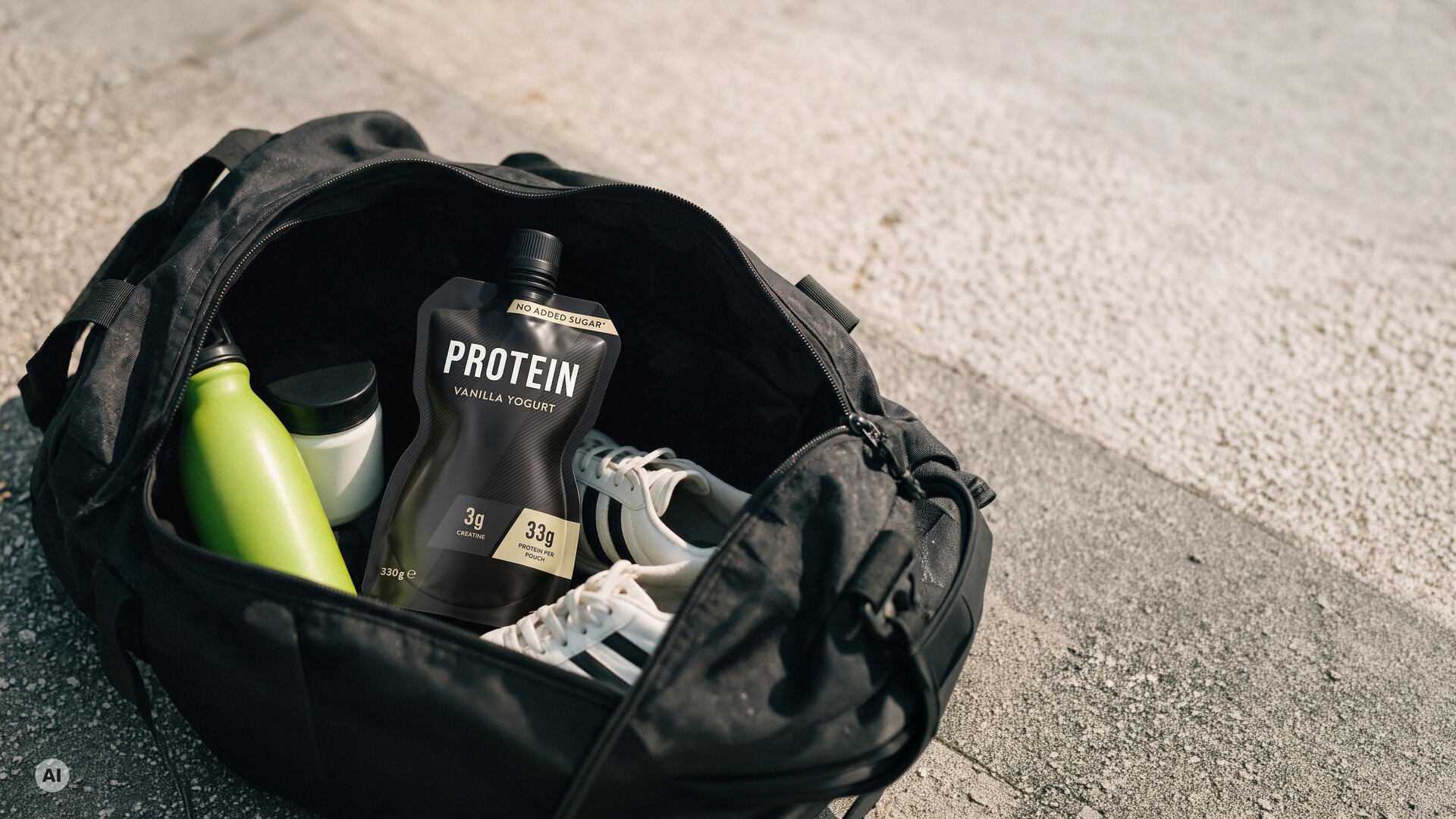
Whether as a protein-rich post-workout snack, a quick bite at the office, or a practical option on the go, consumers expect products that fit seamlessly into their daily routines.
These expectations are also raising the bar for drinkable yogurt packaging concepts.
For manufacturers, this means regularly reassessing established packaging solutions and evaluating new approaches. After all, modern drinkable yogurt packaging must do much more than simply protect the product.
The main options for drinkable yogurt include traditional bottles, cups designed for drinking, and flexible packaging concepts such as spouted pouches. The right solution depends on the product concept. Key factors include product protection, seal integrity, suitable barrier properties, reliable filling performance, consumer convenience, recyclability, and suitability for the intended sales channel—from the refrigerated aisle to on-the-go applications.
Drinkable yogurt is a microbiologically sensitive dairy product with specific packaging requirements. The product ranges from liquid to viscous, must be easy and clean to drink or pour, and needs to remain reliably leakproof when carried on the go. Dairy packaging must therefore meet numerous technical requirements at the same time.
These requirements include reliable protection against oxygen and moisture, lasting seal integrity during transportation and use, hygienic and user-friendly dispensing, and stable performance in industrial filling processes. Depending on the product concept, manufacturers must also consider cold-chain requirements, shelf life, reclosability, and controlled drinking or pouring. At the same time, dairies need to factor in regulatory developments such as the EU Packaging and Packaging Waste Regulation (PPWR) and increasingly stringent requirements for packaging designed for recycling.
Developing new packaging for dairy products is therefore often a balancing act between product safety, processability, consumer needs, and resource efficiency.
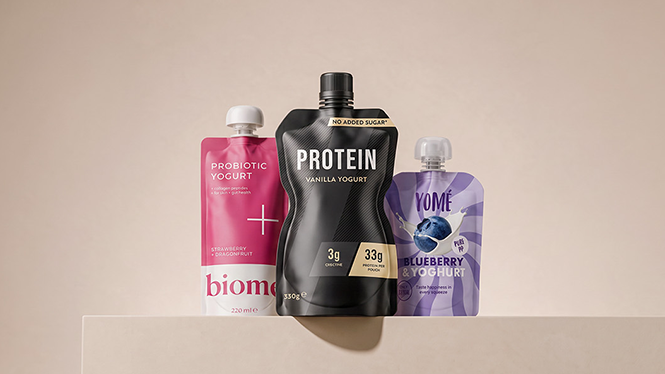
Many innovation projects do not begin with a new packaging technology, but with a strategic question: Which target groups should the product reach in the future?
New product ideas regularly emerge in high-growth segments such as high-protein products, functional dairy, children’s nutrition, and portable snack solutions. The goal is often to create new consumption occasions, differentiate products at the point of sale, or respond to changing consumer needs.
Packaging thus becomes an integral part of the product concept. It influences not only how the product is handled, but also how it is positioned in the market.
The drinkable yogurt market is still dominated by rigid packaging. Bottles, in particular, are an established and familiar format. They offer strong visibility in the refrigerated aisle, accommodate different serving sizes, and are broadly supported by existing retail and logistics infrastructures. Cups designed for drinking are another option, especially for single-serve product concepts.
At the same time, the requirements for modern drinkable yogurt packaging are changing. New consumption habits, rising expectations for convenience, stricter packaging recyclability requirements, and the desire for stronger competitive differentiation are prompting dairies to take a fresh look at established packaging concepts.
This does not necessarily mean replacing proven packaging formats. Rather, the question is which concepts are best suited to support future product and market developments. In addition to adopting recyclable packaging structures, the shift from rigid to flexible packaging solutions is increasingly moving into focus.
Flexible packaging formats such as spouted pouches are among the most dynamic growth segments in the packaging market. Pouches and sachets are forecast to post average annual growth of around 8.3% through 2031. This trend shows that flexible packaging solutions are increasingly viewed across many food categories as a complement to traditional bottle and cup formats.
A major driver of this development is changing consumer needs. Younger, mobile, and environmentally conscious target groups in particular expect products that fit easily into their daily routines. Drinkable yogurt is increasingly consumed on the go, after exercise, at the office, or as a snack between meals.
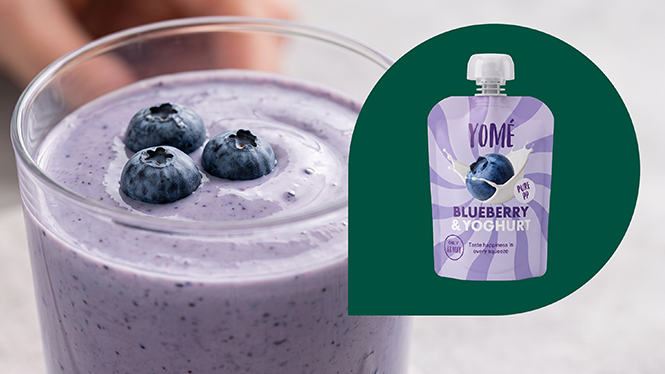
Spouted pouches support this trend in several ways. They are lightweight, easy to carry, and allow consumers to enjoy the product conveniently straight from the package. Reclosable spouts make them particularly well suited to on-the-go concepts and portion-controlled applications.
Flexible packaging also offers potential for developing new product concepts. From high-protein and functional dairy products to children’s products and convenience snacks, the format gives dairies additional opportunities to reach new target groups and consumption occasions while differentiating products at the point of sale.
Environmental considerations also play an important role. Depending on the application, flexible packaging can be designed to use less material than many rigid formats, supporting a brand’s positioning with specific, application-based resource-efficiency benefits. A closer look at logistics and product protection reveals where such benefits may arise along the value chain.
Flexible spout solutions can offer efficiency advantages over certain rigid packaging formats such as bottles or cups. Lower material use can make packaging concepts more resource-efficient, provided the material structure, product, and application are optimally aligned.
Logistics is another potential advantage: because empty pouches are delivered flat, storage and transportation capacity can be used efficiently. Compared with preassembled rigid packaging, more packaging units can be transported and stored in the same amount of space.
The flexible format can also create opportunities for efficiency gains further along the supply chain. Its low weight and compact shape may reduce handling requirements in storage, transportation, and internal logistics processes.
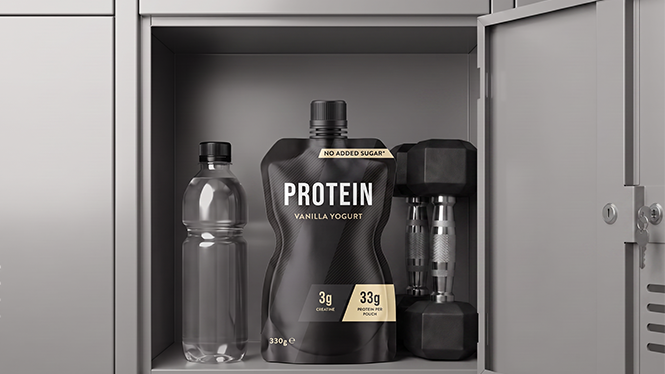
For consumers, spouted pouches also offer a high level of convenience. Depending on the design, they can be reclosed, portioned easily, and emptied cleanly. This makes them particularly suitable for mobile consumption occasions and use on the go.
This requires a packaging structure tailored to the specific needs of sensitive dairy products. Modern recyclable multi-layer and mono-material solutions can provide the necessary barrier properties and help support product safety, quality, and shelf life throughout the product’s intended life cycle.
SÜDPACK’s CarbonLite® Spouted Pouch PurePP demonstrates how these requirements can be implemented in a flexible packaging solution. The PP-based film solution was developed for liquid and pasty foods and enables the production of spouted pouches with customizable barrier properties and high process stability. When paired with a PP spout, the packaging concept can be designed for recovery in the PP recycling stream, supporting dairies’ design-for-recycling strategies.
This is where SÜDPACK’s PP-based CarbonLite® Spouted Pouch PurePP film solution comes in. Developed for liquid and pasty foods, it supports the production of spouted pouches with customizable barrier properties and high process stability. In combination with a PP spout, the packaging concept can also be designed for recovery in the PP recycling stream, thereby supporting dairies’ design-for-recycling strategies.
However, introducing new packaging solutions for dairies involves far more than selecting a packaging material.
Even in the early development stages, questions regarding processability, product safety, shelf life, machine compatibility, and market launch need to be addressed. Quality assurance, logistics, and regulatory assessment must also be taken into account.
This is precisely why partners capable of supporting the entire development process—not just supplying packaging materials—are becoming increasingly important. Sampling, material testing, packaging trials, and application engineering support help identify potential risks early and bring innovations to market faster.
SÜDPACK supports dairies in developing and evaluating suitable spouted pouch solutions—from material selection, testing, and sampling to design for recycling. Services include:
→ integrated value chain: combining in-house extrusion and comprehensive material control with converting and printing
→ material testing on specialized testing equipment
→ sampling for individual applications
→ technical consulting and support
→ support with CO2 and recyclability assessments
→ long-term partnerships focused on functional, stable, and scalable solutions
The result is dairy packaging that considers technical requirements, process efficiency, and design for recycling from the outset—tailored to the specific product, application, and supply chain requirements.
For dairies, advancing their packaging portfolios will remain an important competitive factor in the years ahead. New consumption occasions, changing consumer expectations, and regulatory developments are increasingly turning innovation projects into a strategic priority.
Modern packaging concepts for drinkable yogurt must therefore deliver far more than product safety alone. The market needs solutions that combine convenience, process reliability, and design for recycling in a meaningful way.
Spouted pouches illustrate how new packaging approaches can help bring innovative product concepts to market successfully while anticipating future requirements at an early stage.
Several packaging formats are suitable for drinkable yogurt, including bottles, cups designed for drinking, and flexible packaging such as spouted pouches. The right solution depends on product requirements, target group, sales channel, and environmental objectives.
Spouted pouches support current consumption trends such as snacking, mobility, and convenience. They are particularly suitable for on-the-go applications, portion-controlled concepts, and innovative dairy products such as high-protein and functional dairy offerings.
Drinkable yogurt packaging must combine product protection, barrier performance, seal integrity, process reliability, and consumer convenience. Design for recycling and regulatory requirements are also becoming increasingly important.
Spouted pouches create new possibilities for mobile consumption occasions and innovative product concepts. They can be designed to be reclosable and are suitable for applications where convenience and easy handling are key priorities.
Recyclability is becoming an important criterion when selecting packaging solutions. Many dairies are therefore evaluating packaging concepts based on design-for-recycling principles to help future-proof their existing packaging portfolios.
Note: Selected graphics used in this article were created with the support of generative AI.