


SÜDPACK Newsletter
Receive regular updates about SÜDPACK, our products and sustainability topics.
Receive regular updates about SÜDPACK, our products and sustainability topics.
Plastic has a bad reputation –but it can play a decisive role in preventing food waste
Plastic packaging is often criticized. At the same time, it is still a key factor for product protection, shelf life and efficient logistics in many applications. The decisive factor is therefore not the simple question of "plastic yes or no?", but how intelligent, material-efficient and recyclable packaging is developed.

 21/07/2026
  4 min.
The answer is: yes.
Even though plastic has long had a negative public image, plastic films still cannot easily be replaced by alternative materials in many applications. Compared with other packaging materials such as glass, paper, cardboard, or aluminum, plastic packaging also offers clear advantages: it combines low weight with high stability, is cost-efficient to produce, highly versatile in shape, and can be equipped with the required barrier properties as well as features such as resealability, easy-open functions, spouts, and much more.
However, it is important to note that plastic is not automatically sustainable. Oversized packaging, unnecessary material combinations, or structures that are difficult to recycle are not future-proof solutions. Packaging only becomes truly sustainable when material use, protective function, and circularity are considered together in a smart and balanced way.
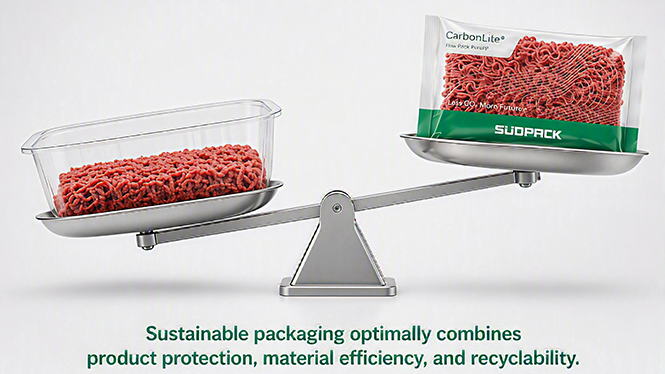
The direction of development over recent years is clear: reduce material use, promote mono-material solutions, and design packaging for recyclability from the start. Structures based on PP and PE are becoming increasingly important because they can combine strong technical performance with improved circularity. At the same time, bio-based solutions are gaining attention where they make sense from both a functional and an economic perspective.
→ material-reduced structures
→ recyclable mono-material solutions (PP/PE)
→ bio-based alternatives where appropriate
Regulatory requirements are rising as well. The new European Packaging and Packaging Waste Regulation (PPWR) significantly tightens the framework: packaging is expected to become more material-efficient, more recyclable, and less wasteful in terms of unnecessary empty space. At the same time, one thing remains true: sustainable solutions have to work in practice – and they have to make economic sense. After all, neither processors nor consumers can bear higher costs indefinitely. The tension between sustainability and cost-effectiveness is therefore real, but solvable – through smart concepts rather than simple either-or thinking.
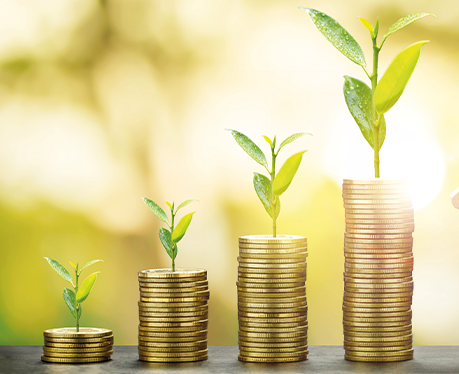
Here too, the answer is: yes. Because everything we’ve already discussed must remain largely affordable. If we want to reduce food waste and food loss, packaging machinery and packaging solutions must fit the economic realities of processors while also taking consumers’ financial situation into account. Especially in economically challenging times like the present, consumers’ willingness to pay more for PP- or PE-based recyclable packaging may be limited.
And yet one thing remains true: there is no progress without vision – and no vision without ambition and courage. If we want to achieve ambitious goals, every link in the process chain matters: society as a whole, consumers, industry, logistics, retail, policymakers, and legislators, from India to South America. We at SÜDPACK are rising to the challenges. Because we want to continue making the world a little better with our products in the future as well.

For SÜDPACK, the focus is therefore on an approach that combines impact with practical feasibility: safe, efficient, and more sustainable packaging solutions that work just as well in highly developed industrial nations as they do in regions facing infrastructure or cold chain challenges. Because only when packaging systems are technically manageable, economically viable, and locally applicable can they fully unlock their potential to reduce food waste.
Conclusion:
Less food waste means greater resource efficiency, stronger climate protection, and more responsibility across the entire food value chain. Packaging – including plastic packaging – is not automatically part of the problem. When designed the right way, it becomes a key part of the solution.
Note: Selected graphics used in this article were created with the support of generative AI.