


SÜDPACK Newsletter
Receive regular updates about SÜDPACK, our products and sustainability topics.
Receive regular updates about SÜDPACK, our products and sustainability topics.
What makes a film truly recyclable?
Anyone talking about recyclable packaging today quickly runs into buzzwords and labels. But true recyclability is not created by a logo on the package—it is the result of clear decisions made across the entire value chain, from polymer selection to printing and additives to actual sortability within the material stream.
Our deep dive brings together lab findings and real-world experience to show what really matters.
 08/07/2026
  4 min.
 1 | Monomaterial instead of multilayer mixes – the foundation for high-quality recycled material
2 | Additives used with care – functional, but precisely dosed
3 | Print & decoration – sortability begins with the design
4 | Opening and peel features – compatible or easily removable
5 | Sortability in the real material stream – where lab and reality come together
6 | A closed quality loop – recycled material that goes back into the product
What does this mean for a functioning circular economy?
Why SÜDPACK is the ideal partner for circular packaging solutions
Innovation that makes circularity possible
End-to-end support – from the initial idea to the running packaging line
SÜDPACK customers advantage: a one-stop shop that reduces complexity
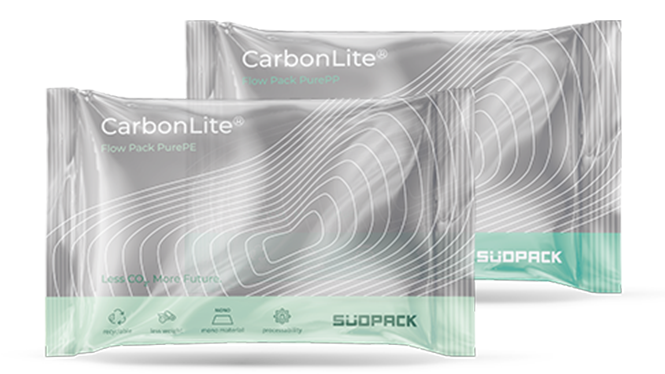
The more homogeneous a packaging structure is, the easier it can be identified, sorted, and recycled. PE or PP monomaterials produce regranulates with a high level of purity—stable in melt flow and clean in processing.
Additives serve important functions, but they can quickly become a challenge in recycling. What matters most is precise fine-tuning.
Modern analyses such as GC-MS or DSC clearly show that controlled dosing helps prevent discoloration and performance loss without compromising material properties. In other words: “As little as possible, as much as necessary.”
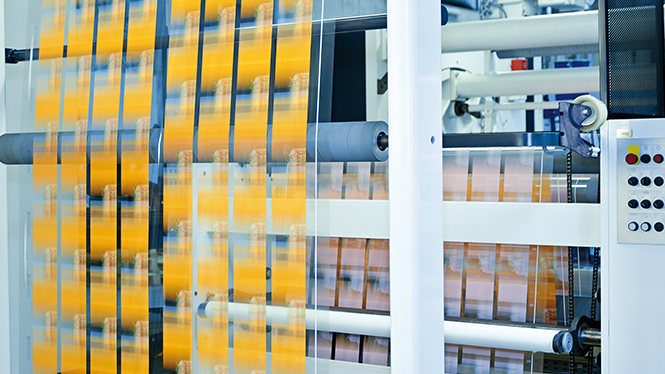
Print and decoration can affect NIR sortability—especially when dark, opaque, or metallic designs are used. Transparent areas, lighter color schemes, and an overall design optimized for sorting can support detection in the sorting process. Particularly critical are dense dark solids containing carbon-black-based or highly reflective pigments, as they make recognition more difficult and can therefore reduce real-world recyclability.
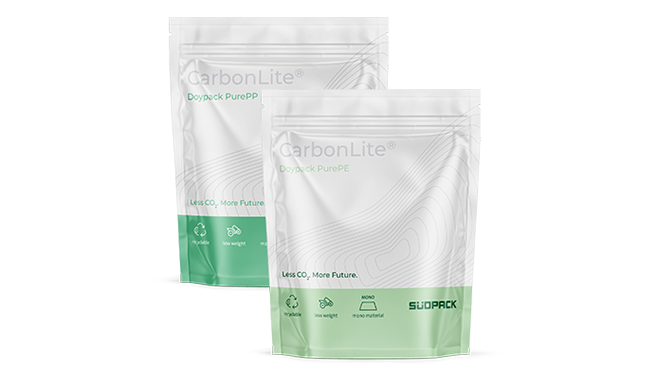
Peel-Layer, Zipper oder Etiketten sind nur dann recyclinggerecht, wenn sie aus kompatiblen Polymertypen bestehen oder sich vollständig ablösen lassen.
Das Ergebnis: weniger Fremdstoffe, stabilere Extrusionsprozesse und geringere Ausschussquoten
Recyclability does not reveal itself on a data sheet, but in the real sorting process.
Rigid, clearly recognizable packaging is detected far more reliably in municipal collection streams than soft, small, or heavily printed formats.
Only the combination of NIR detection, stiffness, and geometry determines actual recycling success.
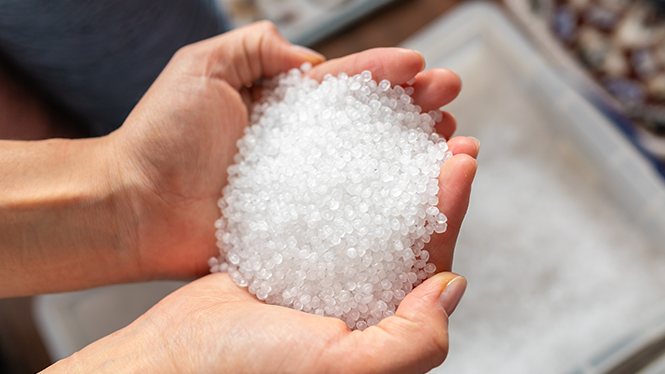
The ultimate benchmark is a material that can be returned to an equivalent—or even higher-value—product.
Odor, color, and strength tests show whether mechanical regranulates meet these requirements—and whether the quality loop is truly closed
Recyclability is not an isolated quality characteristic—it is a shared design responsibility.
When development, procurement, production, printers, retailers, waste management companies, and regulators collaborate early, structures emerge that are both ecologically and economically compelling.
That is how an intention becomes a verifiable result—and a real contribution to the circular economy.
For all of these factors to come together in a solution that works, it takes a partner who combines technology, expertise, and practical know-how.
SÜDPACK is one of Europe’s most innovative film manufacturers—with exceptional depth in materials and an infrastructure that seamlessly connects development, production, and application engineering.
Technological depth from a single source
SÜDPACK covers the entire process:
– Extrusion (blown and cast film)
– Printing (rotogravure, flexo, 7C, digital printing)
– Laminating and slitting
– Compounding
– In-house prepress, laboratory, and quality assurance
– Application engineering
– In-house R&D department and pilot lines
This structure makes SÜDPACK independent, flexible, and fast—and enables customer-specific solutions that are implemented with scientific rigor and practical relevance.
Strategic investments in monomaterial technologies, print-optimized designs, and resource-efficient films create the foundation for sustainable packaging solutions.
The multiXtrusion pilot line enables near-industrial testing, material optimization, and realistic validation—a key factor for developing recyclable solutions.
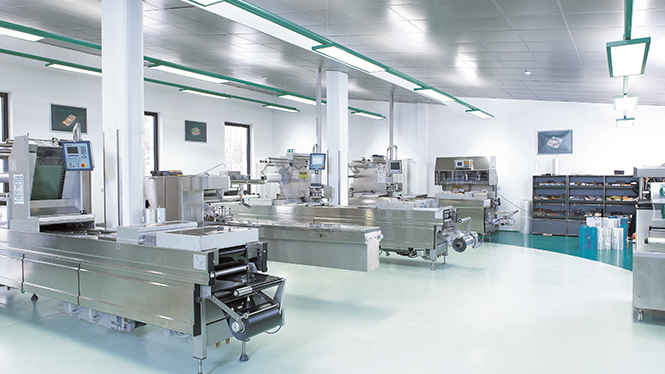
SÜDPACK supports customers across the entire process chain:
– Concept & design for recycling
– Prototyping & lab analysis
– Machine trials & optimization
– Industrialization & production support (from sampling and industrial trials to approved product release and ongoing support from our application engineering team).
Packaging is always viewed as a complete system—balancing product protection, performance, cost-effectiveness, and recyclability.
Customers receive more than just a material—they get a complete solution.
SÜDPACK listens, thinks ahead, and solves complex challenges across the entire value chain—for food, medical devices, and non-food applications alike.