


SÜDPACK Newsletter
Receive regular updates about SÜDPACK, our products and sustainability topics.
Rising costs, changing consumer habits, and growing competitive pressure are reshaping the bread and baked goods industry—and its packaging concepts.
Sustainable packaging for baked goods needs to balance product protection, shelf life, recyclability, and cost-effectiveness. Here’s why this is creating new challenges for the industry—and making packaging an increasingly important strategic success factor.
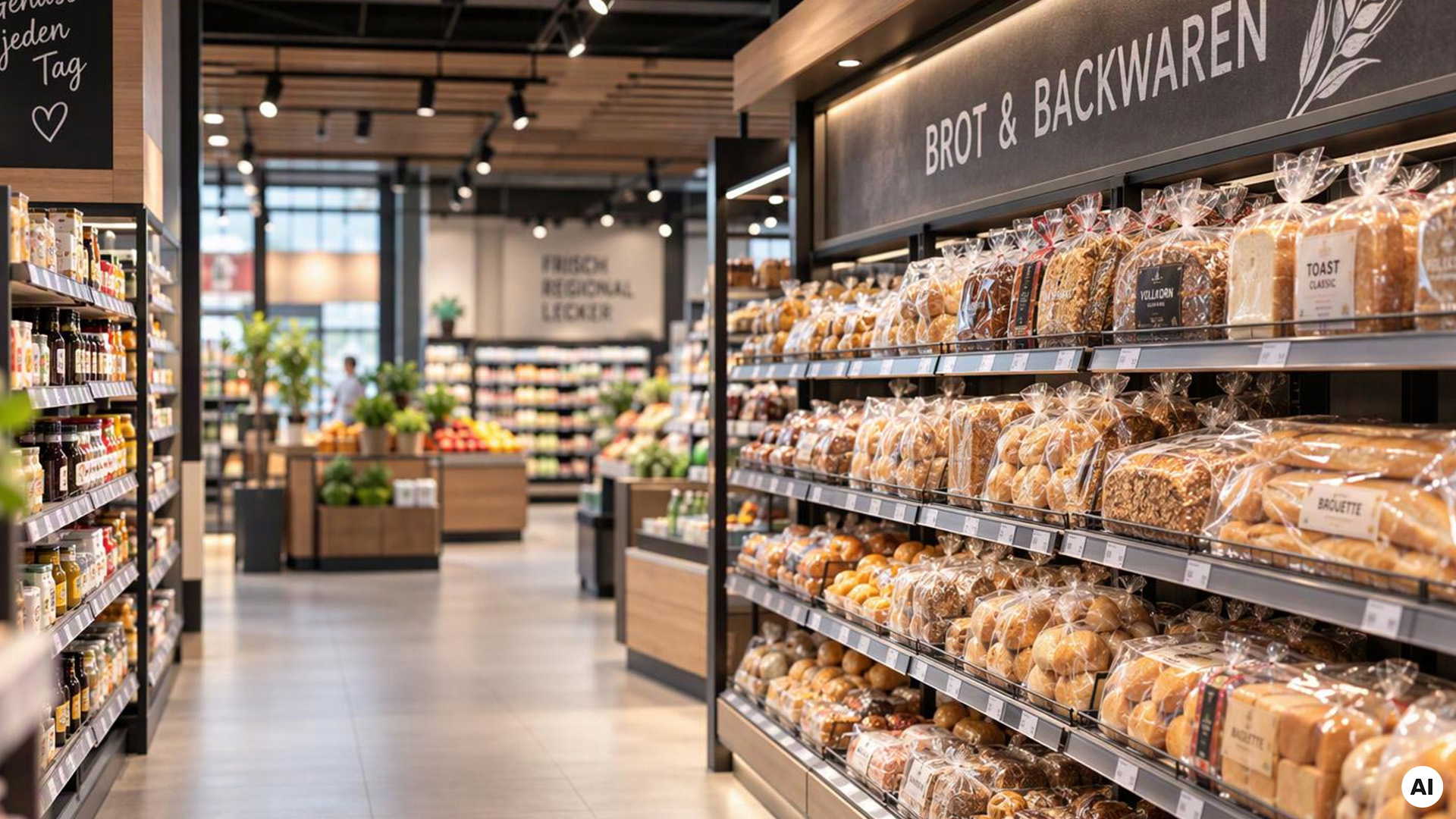
Bread is an everyday staple for many people. Behind the scenes, however, the industry faces significant economic and structural challenges. Fluctuating raw material prices, high energy costs, and rising expenses for logistics and packaging materials are putting businesses under strain. Recent coverage by Lebensmittel Zeitung* also highlights plant closures and increasing market consolidation.
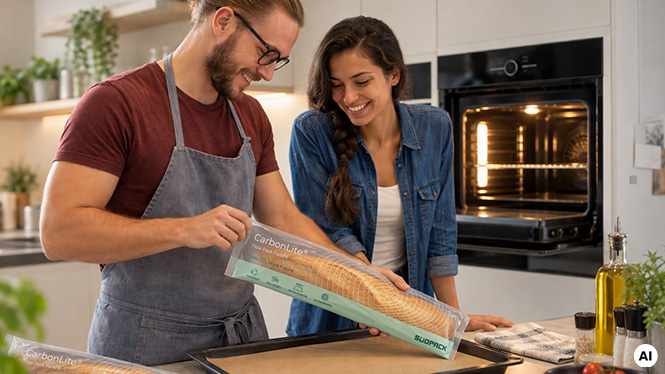
Demand is changing, too. Traditional bread consumption is trending downward, while consumption habits and eating occasions are shifting, especially among younger consumers.
Meanwhile, convenience-focused options, bake-at-home products, and frozen baked goods are gaining ground.
For baked goods manufacturers, this creates a difficult balancing act: keeping costs and processes under control while adapting to new market demands. Packaging is coming into sharper focus at precisely this intersection. It affects not only how well a product is protected, but also how efficiently it can be packaged and how well the packaging concept is prepared for future regulatory requirements.
The primary role of packaging remains unchanged: to reliably protect the product.
Bread, baguettes, rolls, and other baked goods with hard crusts, sharp edges, or seeds can place considerable mechanical demands on packaging.
Depending on the product, barrier and sealing properties are also important—for example, to protect against oxygen or moisture.
Packaging also plays a role in achieving the shelf life baked goods require. A shelf life tailored to the product’s needs can, in turn, help limit product losses along the value chain. Any discussion of food waste therefore needs to include product protection.
This is where the challenge lies. Packaging must continue to perform its functional roles reliably while meeting growing demands for recyclability. The key question is not “Product protection or recyclability?” but “How can the two work together?”
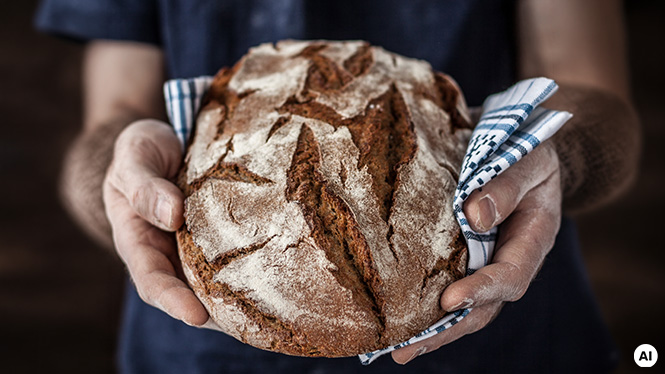
The European Packaging and Packaging Waste Regulation (PPWR) is adding momentum to this shift. For industrially packaged baked goods sold through grocery retailers, recyclability requirements are particularly relevant.
As a result, packaging structures that have proven their value in practice over many years are coming under scrutiny. These include multilayer laminates with a high polyamide content. They are used for industrially produced baked goods because they can combine mechanical protection, barrier performance, and good processing characteristics. Their composite structure, however, means they do not adequately meet future recyclability requirements. This affects conventional lidding films, for example, as well as various flow wrap applications.
For many manufacturers, this marks the start of a fundamental reassessment of their packaging for baked goods.
One specific approach to innovation at SÜDPACK is to further develop material combinations that retain their functionality while fitting more effectively into future circular systems. In parallel, the company has continued to expand its portfolio of PP- and PE-based packaging systems.
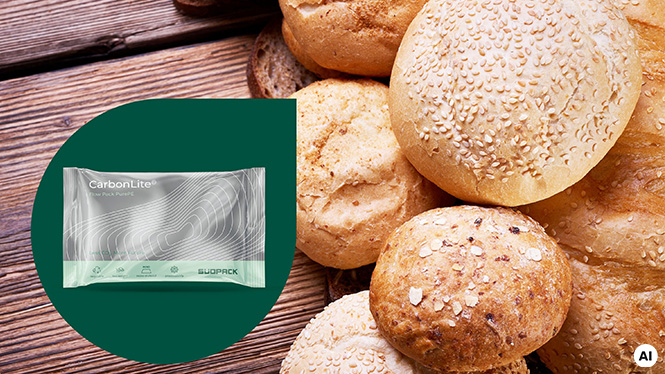
SÜDPACKs CarbonLite® product family, for example, can be converted into flow packs for baguettes, rolls, rustic breads, and pastries. Barrier and sealing properties help protect against moisture and oxygen, while puncture resistance is designed to withstand mechanical stress from crusts, edges, or seeds.
These solutions can enter existing recycling streams in many European countries.
Switching to these structures, however, is not simply a matter of replacing one material with another. What looks more compatible with recycling on paper still has to prove itself in day-to-day production.
This is one of the biggest challenges of the transition: recyclability and product protection need to be considered together.
New material structures must also withstand the stresses caused by crusts, edges, or seeds and deliver the barrier and sealing properties each application requires. At the same time, the necessary shelf life must remain a priority.
PP- and PE-based solutions can differ from established PA laminate structures in their mechanical properties and processing behavior. Whether a new packaging concept works is therefore determined not just by material selection, but by its performance on the packaging machine and with the actual product. How reliably does the film run? Which settings are needed? Does it provide the required product protection? And is the concept economically viable?
That is why successful packaging innovation depends on the interplay between material, machine, and application. Packaging suppliers, equipment manufacturers, and baked goods producers need to work together to test, trial, and validate new solutions.
There is another challenge on the horizon: the use of recycled materials is becoming increasingly important. The availability of suitable post-consumer recycled (PCR) materials and the regulatory requirements governing their use in food packaging add further complexity.
What does this mean for baked goods manufacturers? Above all: start early.
Material selection, sampling, packaging line trials, and technical and economic validation all take time. Manufacturers that analyze existing packaging concepts and test alternatives under real production conditions early on can build experience before regulatory pressure intensifies.
SÜDPACK therefore recommends exploring alternative packaging solutions now and assessing potential concepts from both a technical and an economic perspective.
This also creates an opportunity. Moving to PPWR-compliant solutions is not just a matter of compliance. It can be a catalyst for rethinking packaging concepts from the ground up: Which solution suits the product? Which works with the existing equipment? Where can recyclability and product protection be brought together effectively?
Packaging is thus evolving from a necessary part of the product into an increasingly important driver of innovation and differentiation. Companies that test and validate today build knowledge and gain greater flexibility to navigate the changes ahead.
The future of packaging for baked goods therefore depends on more than the material a film is made from. What matters is whether material, product, and machine work together as a complete system. When they do, sustainable packaging for baked goods can help reconcile recyclability, product protection, and economic requirements.
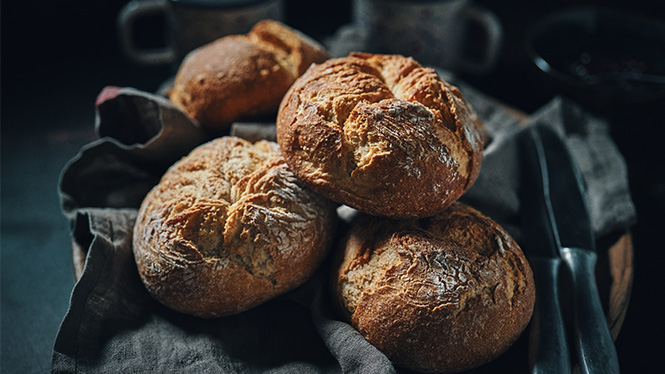
Modern packaging for baked goods must above all provide the required product protection and shelf life and run reliably on the intended packaging equipment. At the same time, recyclability requirements are increasing. Depending on the baked goods, key factors include mechanical strength as well as barrier and sealing properties.
The PPWR raises the bar for recyclability in particular. This puts pressure on established multilayer structures with a high PA content. Baked goods manufacturers should therefore assess their existing packaging concepts early and test and validate potential alternatives.
PP- or PE-based monomaterials offer a way to design packaging concepts with a stronger focus on recyclability. These solutions are already available. Whether they are suitable for a specific application, however, also depends on product protection, processing performance, and the technical requirements of the product in question.
Solutions designed for better recyclability can deliver the functions required of packaging for baked goods. The specific application, however, is key. Mechanical properties, barrier performance, sealing behavior, and shelf life must therefore be tested and validated for the individual product and packaging process.
Because packaging is increasingly where several strategic priorities converge: product protection, recyclability, process efficiency, regulatory requirements, and cost-effectiveness. Companies that test and validate new concepts early build practical knowledge and gain greater flexibility as the transition continues.
* Sources:
„Marktanalyse: Brot- und Backwarenbranche in der Bredouille“ (06.11.2026, Marktanalyse: Brot- und Backwarenbranche in der Bredouille); Silvia Flier
„Brot und Backwaren: Das plant Lieken für die Zukunft“ (Donnerstag, 10. September 2026, Brot und Backwaren: Das plant Lieken für die Zukunft); Silvia Flier
„Umstrukturierung: Aryzta macht zwei Werke in Deutschland dicht“ (Montag, 26. Oktober 2026, Umstrukturierung: Aryzta macht zwei Werke in Deutschland dicht); Jessica Becker