


SÜDPACK Newsletter
Receive regular updates about SÜDPACK, our products and sustainability topics.
Receive regular updates about SÜDPACK, our products and sustainability topics.
Why in-house production of spouted pouches is an economically compelling option
Rising costs and growing demand for flexibility are putting packaging into sharper focus for many food manufacturers. In-house production of spouted pouches, especially for demanding applications such as hot filling or pasteurization, creates new opportunities to reduce packaging costs, streamline processes, and generate additional value within the company’s own operations. This article shows the potential behind the concept and the applications for which it is particularly suitable.
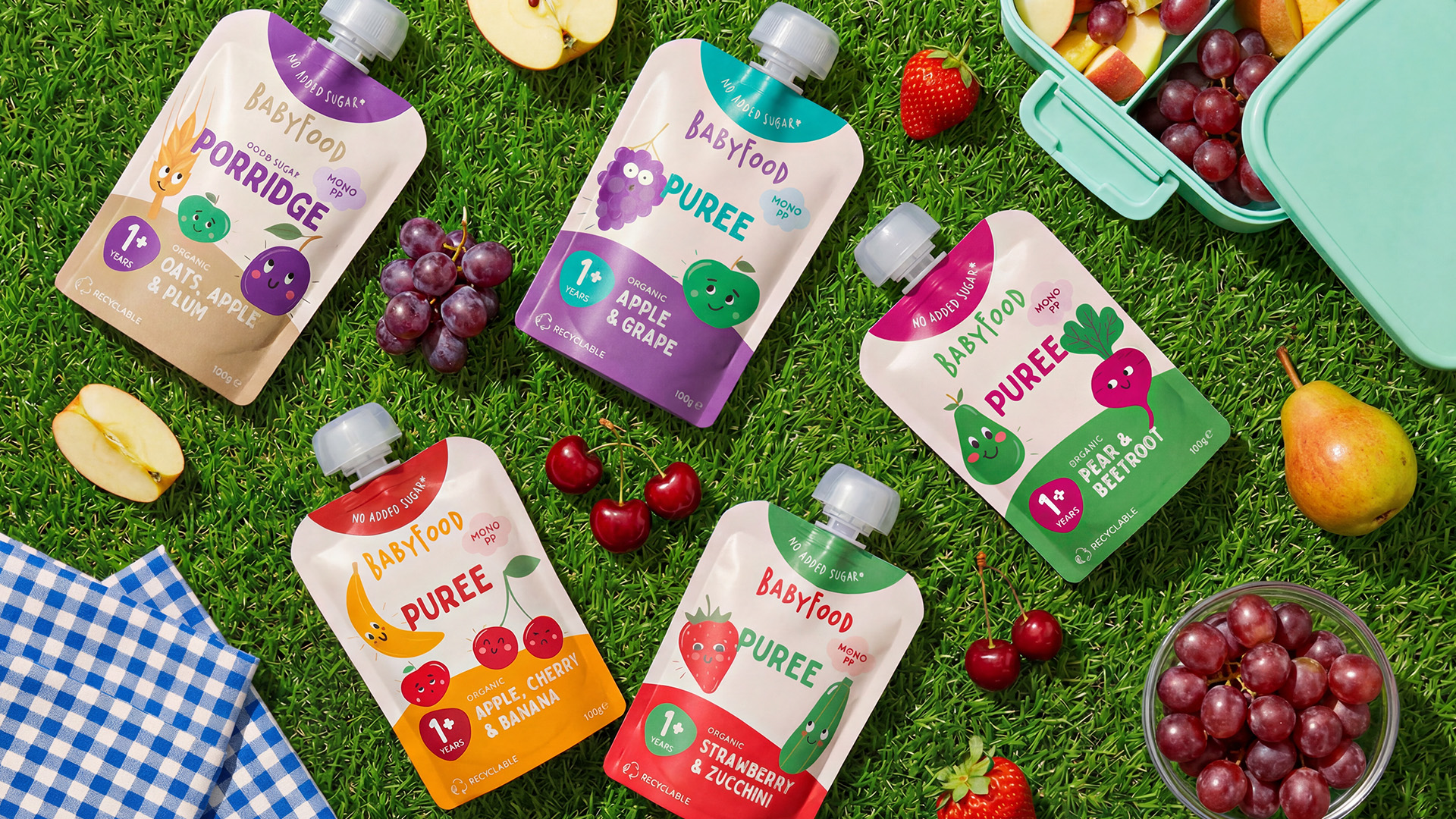
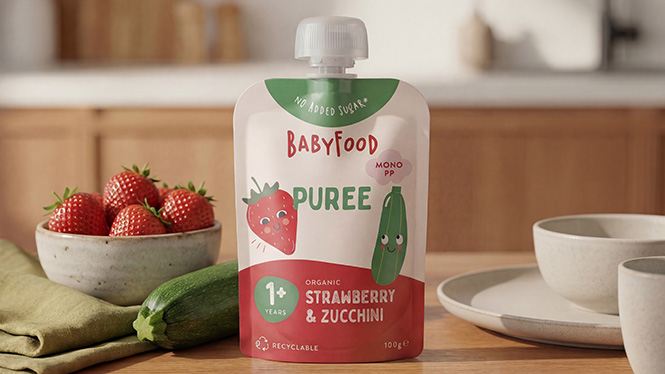
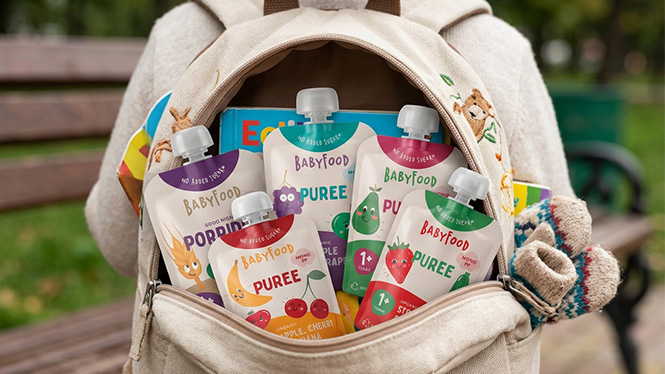
Rising costs, limited storage space, and the need for greater flexibility are creating challenges for many food manufacturers. Especially for fruit purées, smoothies, baby food, and other liquid or pasty products intended for demanding applications such as hot filling or pasteurization, choosing the right packaging is essential. Companies with in-house spouted pouch production gain new opportunities for cost and process optimization.
How the process works: In-house production involves manufacturing spouted pouches directly at the production site from film rolls and spouts. At the heart of the process is a horizontal pouch-making machine. It processes the film from the roll, seals in the spout, and produces finished pouches which are then automatically inserted into standard rail systems and made available on transport trolleys.
As part of the process, the rails can be inserted ergonomically into existing pouch filling machines, where the pouches are then filled. This eliminates the time-consuming and physically demanding unpacking and separation of prefabricated pouches. The standard deposit system for rails and end caps is also no longer required in this workflow, which can help reduce additional effort and support process reliability.
When companies think about savings, the focus is often on purchase prices. Yet the greater impact is frequently achieved somewhere else: in the process.
Companies that move away from prefabricated spouted pouches can reduce storage and transport requirements. Film rolls and spouts take up significantly less space than finished pouches. According to SÜDPACK, the required storage space is roughly one third of the space needed for prefabricated pouches. At the same time, cartons and part of the internal handling effort are eliminated.
As a result, companies can optimize their packaging costs without having to compromise on quality or product protection.
Demand for smaller batch sizes, new products, and customized packaging solutions is increasing. This is precisely where in-house packaging production can offer advantages.
Instead of keeping large volumes of finished pouches in stock, packaging can be produced according to actual demand. Different formats and spout variants can be implemented flexibly. This increases production flexibility and makes it easier to respond to market requirements or seasonal fluctuations.
Producing spouted pouches on site also means greater control over availability, volume planning, and production workflows. Packaging evolves from a purchased component into an integrated part of the company’s own production.
This strengthens internal value creation and embeds packaging more closely into the overall process landscape.
In-house production of spouted pouches is far more than a technical option. Depending on the application and production environment, it can help to reduce packaging costs, use storage capacities more efficiently, lower handling effort, and create additional value directly within the company’s own operations.
This approach is made possible by the coordinated interaction of three specialists: SÜDPACK contributes its film and materials expertise, SN Maschinenbau provides the machine technology for producing pouches from rollstock, and MENSHEN adds its know-how in spouts and closure systems.
Together, this creates an integrated solution for the in-house production of spouted pouches, which is particularly relevant for liquid and pasty foods requiring hot filling or pasteurization. For food manufacturers and fillers, the cooperation can therefore represent an important step toward more cost-effective, efficient, and controllable packaging processes.
They are particularly suitable for liquid and pasty foods requiring hot filling or pasteurization, such as fruit purées, smoothies, baby food, or sauces.
Yes. The saving potential primarily results from reduced storage requirements, lower transport volume, and less handling effort.
Yes. SÜDPACK’s PP-based film solutions are designed for applications such as hot filling and pasteurization.
Note: Selected graphics used in this article were created with the support of generative AI.