



SÜDPACK Newsletter
Receive regular updates about SÜDPACK, our products and sustainability topics.
Receive regular updates about SÜDPACK, our products and sustainability topics.
Mechanical strength, reliable processing, and a carefully designed material structure: What matters in outer packaging for sensitive bioprocessing applications.
Transport, storage, and handling: Before a process bag is put to use, it is exposed to a range of stresses. Its outer packaging therefore plays an important protective role. But in sensitive bioprocessing applications, mechanical strength is only part of the picture. Sealing properties and material composition are equally important.
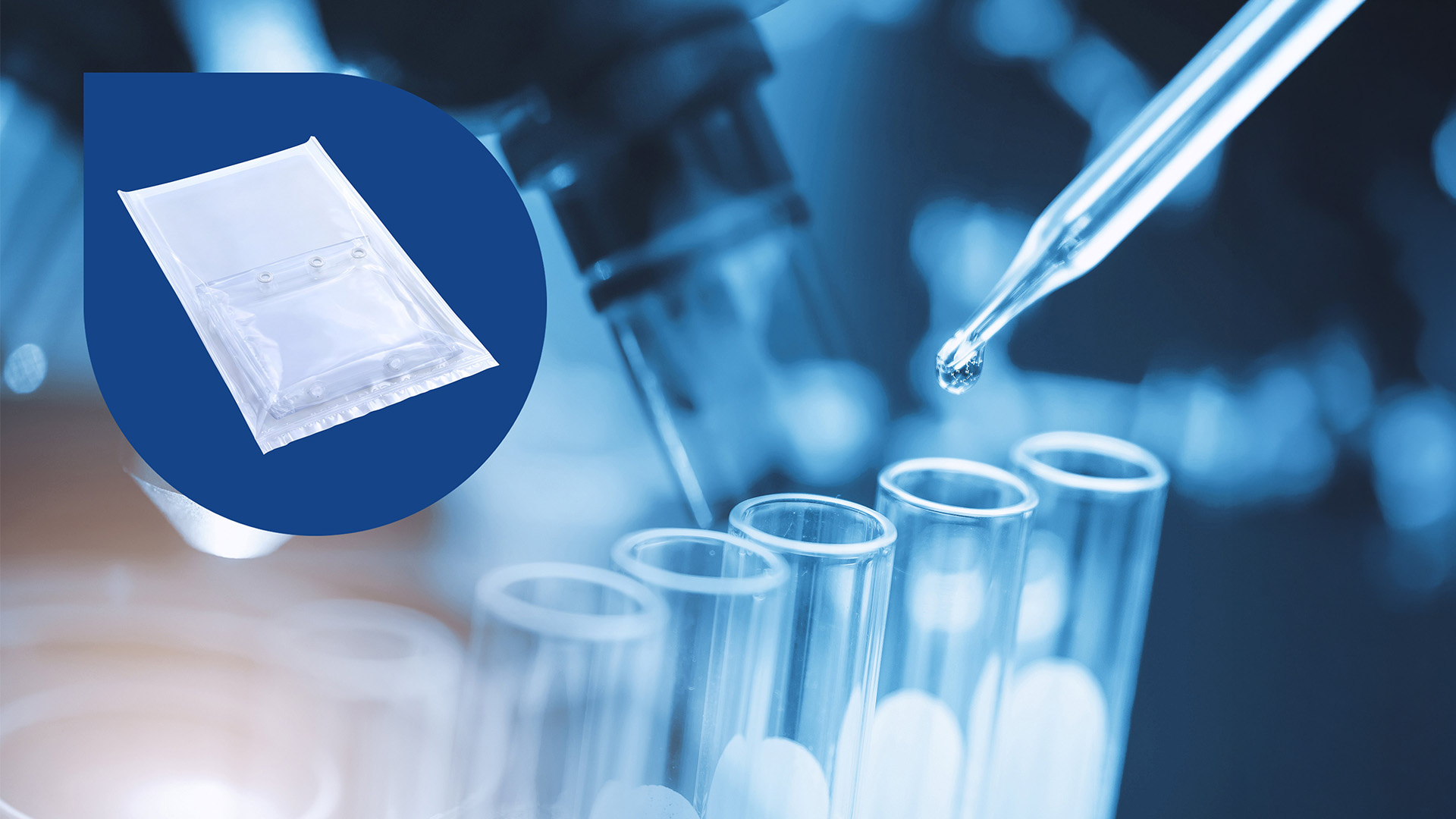
Process bags are used in sensitive cell culture and bioprocessing applications, among other areas. Before they can fulfill their intended purpose, they pass through several stages, from transport and storage to various handling operations. These stages can expose the packaging to mechanical stress.
Outer packaging protects the primary packaging against stress and potential damage throughout these stages. It must therefore be tailored to the specific application and the demands involved. Alongside mechanical strength, reliable processing and sealing properties are essential. At the same time, the composition of materials used in life science packaging is coming under greater scrutiny.
How reliably outer packaging provides protection depends largely on its mechanical performance. Key requirements include high puncture resistance and excellent flex-crack resistance, enabling the film to withstand repeated mechanical stress during transport, storage, and handling.
Coextruded PA/PE films have been an established choice for applications with demanding mechanical requirements for many years. The two polymers serve different functions: Polyethylene primarily supports sealability and processing properties, while polyamide typically contributes the necessary strength and durability.
To ensure that outer packaging reliably protects the process bag until it is put to use, these mechanical properties must work in tandem with reliable processing and sealing.
For packaging used in bioprocessing applications, however, mechanical properties are not the only consideration. Potential interactions between packaging materials and sensitive biotechnology processes are also examined. Even small amounts of migrating substances may raise concerns in certain applications.
The challenge is therefore to minimize potential sources of contamination without compromising the required mechanical performance or reliable processing and sealing properties.
The mono-PE solution developed by SÜDPACK Medica takes this approach.
Unlike conventional PA/PE structures, the material concept is based entirely on polyethylene, eliminating the need for polyamide, adhesive agents, and other migratable substances of concern found in conventional PA/PE coextruded structures.
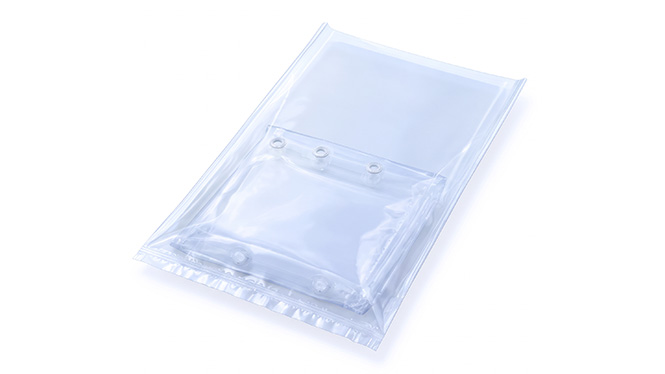
To achieve the required mechanical and barrier properties despite these changes, extensive raw material screening was combined with targeted material selection and optimizations to the coextrusion process. Internal testing indicates that the film offers high puncture resistance, excellent flex-crack resistance, and reliable processing and sealing properties.
When designing outer packaging for process bags, individual material properties cannot be considered in isolation. What matters is the interplay between mechanical strength, material composition, and processing.
The mono-PE solution offers an additional benefit: Its polyethylene structure makes it compatible with established PE recycling streams and has a calculated recyclability rate of 100%, according to an internal assessment using CHIRA software. (This figure is based on the conditions underlying the internal calculation.)
The takeaway: Choosing a particular material is not enough when it comes to protective packaging for bioprocessing applications. It is the carefully balanced combination of properties that makes outer packaging an important part of the overall packaging concept for sensitive cell culture and bioprocessing applications.
Before use, process bags go through transport, storage, and handling operations. Outer packaging protects the primary packaging against mechanical stress and potential damage during these stages.
Key criteria include mechanical strength, puncture resistance, and flex-crack resistance, as well as reliable processing and sealing properties. In life science applications, material composition also plays an important role, as potentially migratable components may raise concerns in sensitive applications.
It influences both mechanical and processing properties, as well as the composition of the packaging structure. For SÜDPACK Medica’s mono-PE solution, raw material screening, targeted material selection, and optimizations to the coextrusion process were therefore combined to achieve the required mechanical and barrier properties with a mono-PE solution.