


SÜDPACK Newsletter
Receive regular updates about SÜDPACK, our products and sustainability topics.
Receive regular updates about SÜDPACK, our products and sustainability topics.
Rising costs, new consumption habits, and regulatory requirements are reshaping the coffee market—and the role of packaging along with it.
Coffee has long been about more than ground coffee or whole beans. New formats, smaller pack sizes, and premium concepts are expanding the market, while rising raw material costs and the PPWR are creating new requirements. Packaging is evolving as a result: it increasingly needs to bring product protection, recyclability, process efficiency, and brand impact together. Six trends reveal where the market is heading.
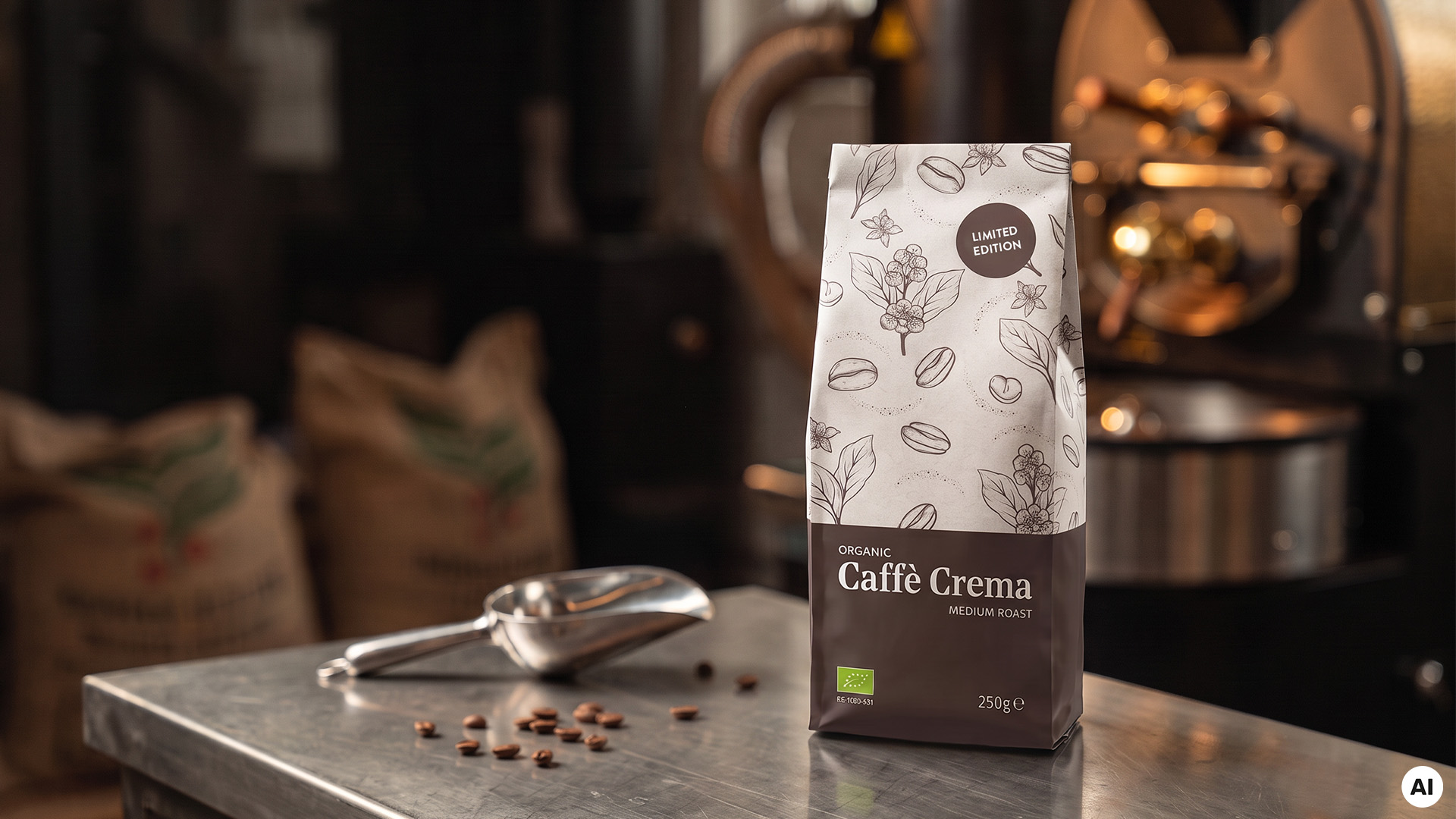
Few products combine everyday routine and enjoyment as naturally as coffee. Yet behind the familiar cup, a great deal is changing. Green coffee prices and volatile commodity markets are increasing economic pressure. At the same time, consumer habits are shifting, new product categories are emerging, and coffee roasters are entering additional markets. New regulatory requirements for packaging add another layer of complexity.
For roasters, this development means one thing above all: more decisions. Which formats will suit the portfolio in the future? How can different sizes be produced cost-effectively? Which materials are the right choice in view of regulatory requirements? And how can a brand stand out as coffee is increasingly positioned as a premium product and an experience?
This brings greater attention to a factor that was long viewed primarily from a functional perspective: packaging.
It no longer simply protects the product. Increasingly, packaging must reconcile a wide range of requirements relating to materials, processing, regulation, and brand presentation. And that is precisely what is driving new trends in coffee packaging.
Coffee is demanding. Aroma and product quality need to be protected throughout the intended shelf life, while the packaging must also be processed and sealed reliably. Whole beans add another special consideration: gases continue to be released after roasting, which is why one-way degassing valves, for example, may be integrated into the packaging concept.
Traditionally, multilayer laminated structures have often been used for this purpose. But as the focus on recyclability increases, the material landscape is changing.
Mono-materials, such as PP-based packaging concepts, are therefore becoming more important. The real challenge, however, is not simply to replace several materials with one. A new structure must continue to meet the technical requirements of the specific coffee product and packaging process.
This is where the changing nature of packaging development becomes particularly clear: recyclability, barrier performance, valve integration, sealing performance, and machinability must be considered together from the outset.
The shift is therefore moving away from a simple material swap and toward a more comprehensive design-for-recycling approach.
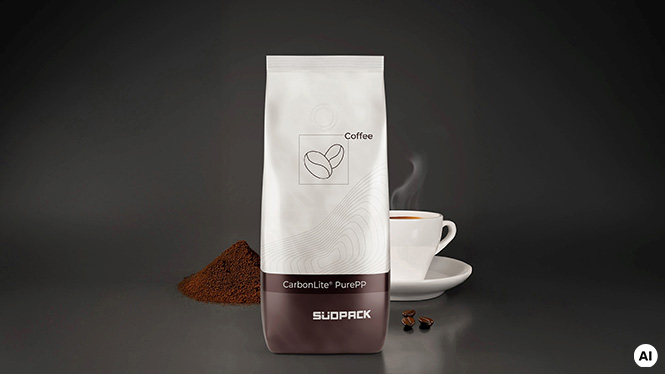
This material shift cannot be viewed separately from European packaging regulation. Under the PPWR, packaging recyclability is receiving even greater attention.
For coffee roasters, this raises a very practical question: Which packaging solution not only performs today, but can also be developed effectively with future regulatory requirements in mind?
This is especially relevant because a material change never happens in isolation. It can affect processing parameters, packaging machinery, valves, barriers, and packaging design. Companies looking to develop their portfolios therefore need to consider these factors together.
Regulation is thus evolving from a compliance issue into a strategic development task. Instead of adapting individual packages one after another, it makes more sense to assess the packaging portfolio as a whole and evaluate potential development paths at an early stage.
But materials and regulation are not the only forces reshaping coffee packaging.
Requirements are also shifting within product ranges.
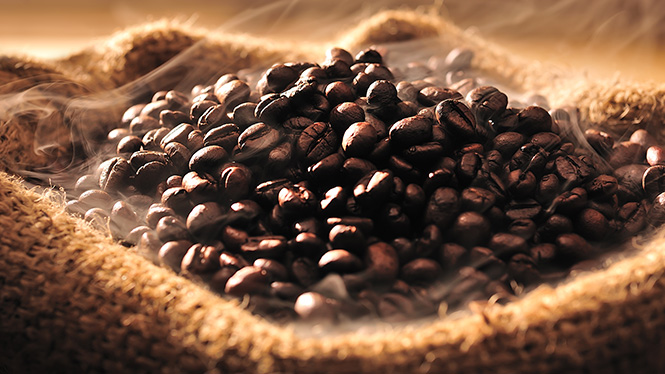
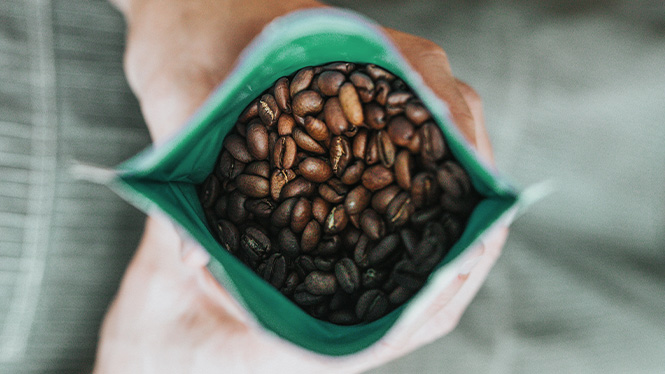
Whole beans in particular play an important role.
For packaging developers, this trend is interesting for two reasons: beans place specific demands on product protection and valve integration, and they are often presented more strongly in the context of enjoyment, quality, and premium value.
Technical and design requirements therefore come together directly. The packaging must deliver the necessary performance while also communicating the brand’s quality promise at the point of sale.
Packaging for coffee beans illustrates particularly well why modern packaging development can no longer be neatly divided into “technology” and “marketing.”
The traditional size of the coffee bag is also becoming less of a given.
When raw material prices rise and product ranges become more differentiated, additional or smaller pack sizes may become attractive. At the same time, as brands expand internationally, products and formats increasingly need to be adapted to different markets.
What may initially sound like a simple change in fill volume has far-reaching consequences: more sizes and variants mean greater complexity in development, design, and production.
Flexible pack sizes are therefore becoming an important aspect of future packaging concepts. Solutions are needed that can accommodate different formats without every change requiring a fundamental redevelopment.
Flexibility is therefore not only a response to changing consumer habits, but also a factor in efficient portfolio management.
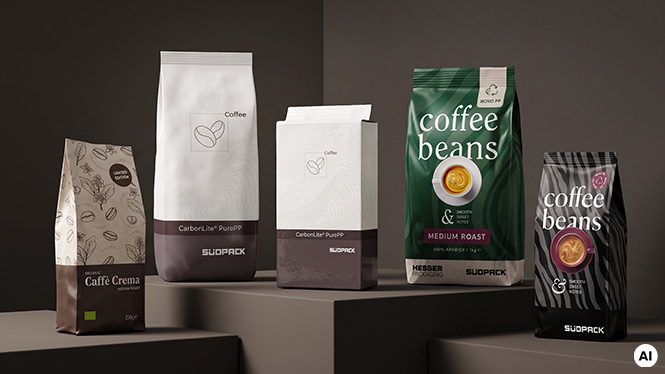
Alongside the growing flexibility of product ranges, another development is taking place: coffee is becoming more differentiated.
Specialty coffee, single-origin concepts, organic offerings, and premium brands tell stories about origin, quality, and enjoyment.
And that story often begins before the package is even opened.
Packaging design is therefore gaining strategic importance. Print quality, color impact, tactile appeal, and matte or gloss effects can help distinguish product lines and make different brand positionings visible.
Once again, this places packaging development at an important interface: a premium appearance alone is no more sufficient than technical performance alone. Materials, print, functionality, and brand impact must work in harmony.
Premiumization does not automatically make packaging more elaborate, but it does make it more strategically relevant
Perhaps the most exciting transformation begins where the familiar image of the product ends.
Beyond whole beans and ground coffee, new offerings are emerging: coffee concentrates, ready-to-drink products, and functional coffee are expanding the category with new formulations and consumption occasions.
This inevitably changes the perspective on packaging as well. A concentrate has different requirements than whole beans. A product designed for on-the-go consumption follows different usage patterns than a traditional pantry bag.
For packaging developers, this opens up a new solution space. Depending on the product concept, flexible packaging formats such as spouted pouches may also become relevant in the future.
And this is precisely where a packaging trend becomes a broader strategic question:
Not only: How can coffee be packaged better? But also: What form will coffee take tomorrow—and which packaging concept will fit it?
Viewed together, these six developments make one thing clear: the future of coffee packaging will not be defined by a single trend.
Recyclability influences material selection. Material selection affects processing and product protection. New pack sizes increase the need for flexibility. Premiumization changes expectations for design and finishing. New coffee formats, in turn, may require entirely new packaging concepts.
That is precisely why it is increasingly insufficient to develop packaging solely around the product.
What is needed instead is a development approach that brings together materials, regulation, production, product protection, and brand impact. For roasters, this also means taking an earlier and more strategic view of packaging portfolios: Which structures will be suitable in the future? Where is there a need for adaptation? Which options can be implemented on existing processes?
SÜDPACK supports this process through collaborative development services that can range from material selection and design for recycling to sampling and technical process support. PP-based mono-material concepts are one possible technological answer. The specific application, however, always remains the deciding factor.
Because ultimately, this is about more than a new coffee bag.
The coffee market is changing. And with it, the role of packaging is evolving—from protecting the product to becoming a strategic component of portfolio management, production, and brand positioning.
Key coffee packaging trends include the shift toward recyclable material concepts and mono-materials, regulatory requirements related to the PPWR, the growing importance of whole beans, more flexible pack sizes, premiumization, and new coffee formats. Together, these factors are changing the requirements for materials, product protection, processing, and packaging design.
Mono-material concepts are becoming more important as the focus on recyclability increases. For coffee, the challenge lies in combining this approach with the application’s functional requirements, including barrier properties, reliable sealing, machinability, and, where applicable, the integration of degassing valves.
The PPWR is changing the regulatory framework for packaging in Europe, increasing the importance of design for recycling. For coffee roasters, this means considering recyclability and material selection early when developing their packaging portfolios.
Because it increasingly has to bring multiple requirements together: product protection and efficient processing remain fundamental, while recyclability, flexible formats, and distinctive brand impact are becoming more important. Packaging development is therefore increasingly serving as the interface between product, production, regulation, and brand.