SÜDPACK Newsletter
Receive regular updates about SÜDPACK, our products and sustainability topics.
Receive regular updates about SÜDPACK, our products and sustainability topics.
Clear Separation as the Key to a Circular Economy
A functioning circular economy starts with correct separation. Especially when recycling PET—one of the most important plastics in the food packaging sector—the purity of material streams determines the quality of the recyclate. Modern sorting and preparation processes deliver impressive performance here – a key success factor is the sink/float method.
 08/06/2026
  3 min.
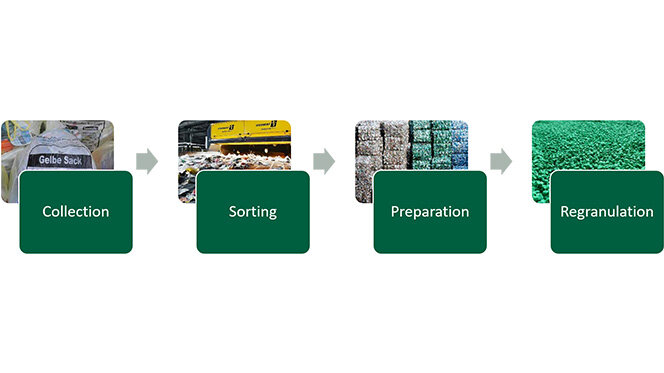
 Before density separation takes effect, plastic packaging goes through several established processing steps:
1. Collection and sorting
Plastic waste from the German “yellow bag” system or from industrial sources is mechanically pretreated in sorting facilities and then separated by polymer type using near-infrared (NIR) technology. PET, PP, PE, etc. can be distinguished quickly, non-destructively, and with high precision— a basic requirement for high-quality recycling.
2. Shredding and washing
The sorted plastic fractions are then shredded and washed. The result is cleaned plastic flakes.
3. Sink/Float: Separation by density
This is where the actual sink/float process takes place. In a water bath, the method uses a simple physical effect: the materials’ different densities.
→ PET, metals, or PS (density > 1) sink
→ Polyolefins such as PE or PP (density < 1) float
The sink/float process separates the plastic flakes into two clearly defined material streams.
At the same time, the process ensures additional wet cleaning—an undeniable quality boost for the regranulate produced later.
This is a key challenge for PET packaging in particular: the lidding films based on polyolefins such as PE or PP must not interfere with the PET stream.
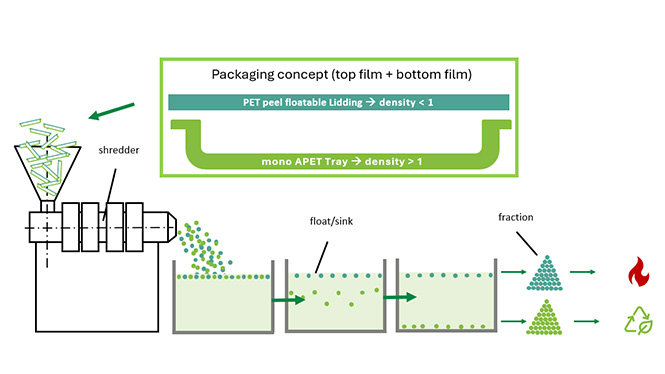
Modern MAP and thermoformed packaging consists of two functional layers:
- Bottom film: typically mono-APET, easily recyclable
- Top film: performs sealing, peel, and barrier functions—often the recycling-critical
The real lever lies in the packaging design. A floatable lidding film can significantly improve the recyclability of the overall concept—depending on the material structure, printing, and label - recycling rates of more than 80 % are realistic.
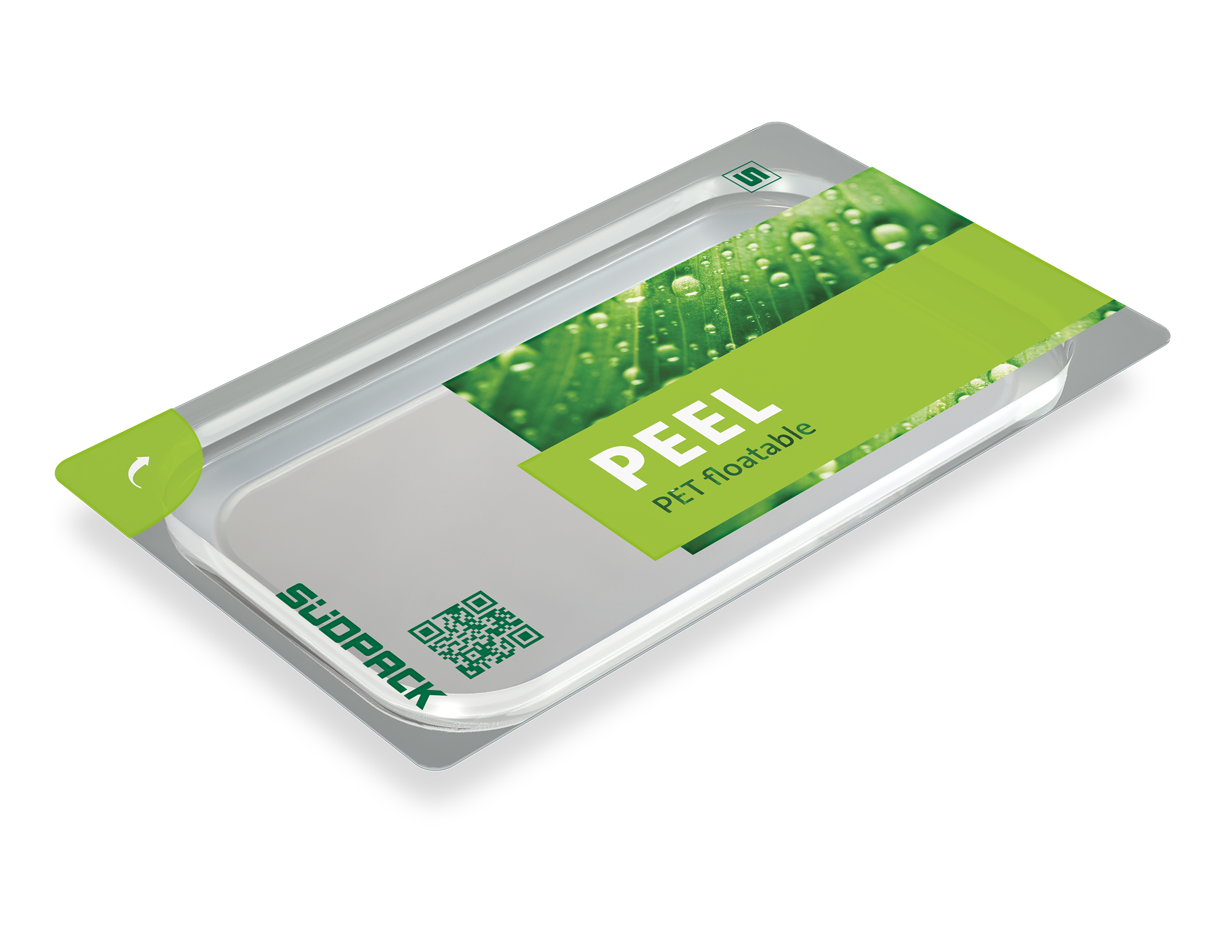
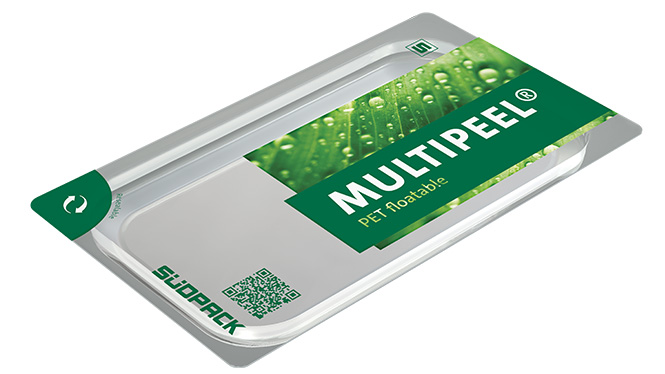
With Peel PET floatable, for example, SÜDPACK offers an innovative top film that floats reliably in the sink/float process—even with printing or a matte lacquer. With a density of < 0.995 g/cm³, it separates from the APET bottom film and does not enter the PET material stream.
The result: a high-quality, single-polymer recyclate from the bottom film—and an overall packaging concept that’s truly recyclable.
Key benefits at a glance:
- Ensures floatability in the recycling process
- Reliable sealing—even with contamination
- Large processing window (130–170 °C)
- High O₂ barrier (< 2.5 cm³/m² d bar)
- High transparency, antifog, printable (incl. SPQ)
- Very material-efficient at just 45 µm
- Up to 30 % lower CO₂ footprint compared to standard APET/PE concepts
The sink/float process is a central component in PET recycling. Packaging solutions from SÜDPACK are specifically designed to optimally support this process - and enable clean separation of top and bottom film in the recycling stream.
This shows what’s possible: smart packaging design can effectively combine recyclability, resource conservation and performance—a clear step toward a circular economy that works.
Note: Selected graphics used in this article were created with the support of generative AI.